
I. Why Baccarat Has Almost No Player Procedure
Baccarat is, procedurally, the simplest game in the casino. The player places a bet on one of three propositions — Player, Banker, or Tie — and then watches. Cards are dealt, the Tableau is applied by the croupier, and the hand resolves. There is no hit, stand, double, split, or surrender. There is no strategic input. This is precisely why the game dominates VIP play: it requires no learning curve, makes no demand on the bettor's attention, and resolves in roughly 35 seconds per hand. A whale wagering HK$1m per hand can move HK$100m through a shoe in 90 minutes without ever choosing what card comes next.
The procedural focus, then, is not on the player but on the croupier and the table furniture: the Tableau, the commission box, the shoe penetration, the road displays, the squeeze ritual. This guide describes each.
II. The Tableau — The Third-Card Rule Grid
Each hand starts with two cards dealt to Player and two to Banker (suits ignored; tens and face cards = 0; aces = 1; others face value; total is modulo 10). The two-card totals decide what happens next:
- If either side has an 8 or 9 on first two cards — a 'natural' — both sides stand. Hand ends.
- If Player total is 0-5, Player draws one third card. If 6-7, Player stands.
- Banker's third-card rule depends on (a) Banker's two-card total and (b) the Player's third card (if drawn). The grid is fixed by Felix Falguière's 19th-century codification:
- Banker 0-2: always draws.
- Banker 3: draws unless Player's third card is 8.
- Banker 4: draws if Player's third card is 2-7.
- Banker 5: draws if Player's third card is 4-7.
- Banker 6: draws if Player's third card is 6-7.
- Banker 7: always stands.
The croupier applies this without consulting anyone. Players do not decide. The Tableau is identical in every licensed Punto Banco game from Las Vegas to Macau to Monte Carlo.
III. The 5% Commission — Why Banker Costs Extra
The Tableau gives Banker the last informational move (Banker's draw is conditional on Player's third card). This advantage causes Banker to win roughly 45.86% of hands and Player 44.62%, with 9.52% ties. Excluding ties, Banker wins 50.68% of resolved hands — a positive raw expectation. To restore house edge, casinos charge a 5% commission on every winning Banker bet, paid by the player.
The commission is tracked procedurally in a numbered commission box in front of the dealer. Each player's box is numbered to match their seat. When a Banker bet wins, the dealer pays the bet at 1:1 (full payout) but adds 5% of the wager to the commission box. At the end of the shoe — or when the player rises to leave — the dealer counts the box and collects the accumulated commission.
This produces the well-known asymmetric edge: Banker 1.06%, Player 1.24%, Tie 14.36% at 8:1 payout (or 4.85% at 9:1, which is rarer). The optimal strategy is trivially 'always Banker.'
IV. Commission-Free Variants — Banker Wins With 6 Half-Pays
Some casinos offer 'no-commission baccarat' or 'EZ Baccarat' as a marketing device. The catch is the substitution: instead of paying 5% on every Banker win, the casino pays only half (1:2) on a Banker win with a total of 6. This event occurs roughly 5.39% of the time and produces nearly identical house edge — about 1.02-1.08%. Mathematically equivalent; psychologically more palatable to players who dislike the commission deduction.
EZ Baccarat additionally introduces two side bets — Dragon 7 (Banker wins with 3-card 7, paying 40:1, house edge 7.61%) and Panda 8 (Player wins with 3-card 8, paying 25:1, house edge 10.19%) — to recover the foregone commission revenue.
V. Shoe Penetration and Cut-Card Placement
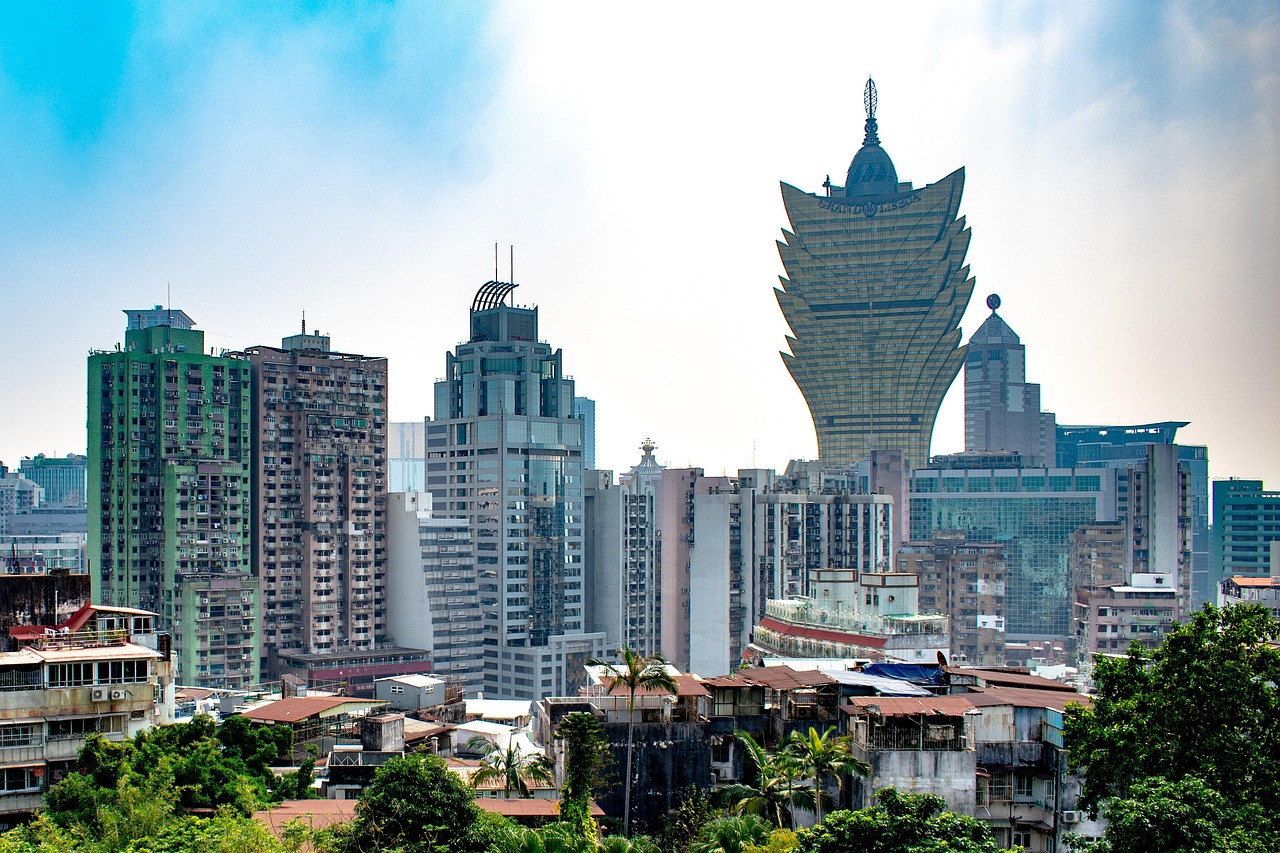
Baccarat uses an eight-deck shoe (416 cards) by industry standard. After shuffling, the croupier offers a player the yellow cut card to insert. The cut card marks where the shoe will end — typically 1 deck (52 cards) from the bottom in Macau, slightly shallower in Vegas. When the cut card appears, the current hand completes and a new shuffle is performed.
Card-counting baccarat is theoretically possible (composition shifts in the remaining shoe favour Banker or Player in subtle ways) but the maximum advantage is roughly 0.7% at extreme counts and occurs on under 1% of hands. The arithmetic gain per shoe is too small to support a counting career; no documented modern team operation runs baccarat counting at scale. Edward Thorp explored the math in The Mathematics of Gambling (1984) and concluded it was 'not worth a serious player's time.'
VI. The Roads — Big Road, Big Eye Boy, Small Road, Cockroach Pig
Every modern baccarat table has a video display showing four tracking charts of the shoe's results. They are cosmetic — past results do not influence future probabilities, and the Tableau is memoryless — but they are mandatory by VIP-room convention.
- Big Road (大路): the basic chart. Each new result (B or P) is recorded; consecutive same-side results stack vertically, switches start a new column.
- Big Eye Boy (大眼仔): tracks the regularity of the Big Road. Red = regular pattern, blue = irregular. Derived two columns to the right of the current Big Road column.
- Small Road (細路): same logic as Big Eye Boy but derived three columns back.
- Cockroach Pig (曱甴路): same logic, four columns back.
The roads are visual artifacts of pattern recognition culture. Many Asian players bet 'follow the dragon' (continue the current streak) or 'choppy' (alternate sides) based on what the roads show. The mathematics says it does not matter; the procedure says the casino must display them anyway.
VII. Card-Squeezing — The Macau Reveal Ritual
In high-limit baccarat, the player with the largest bet receives the dealt cards before they are turned face-up. The player performs the squeeze: bending the long edge slightly to peek at the value, then the short edge, then unfolding the card slowly to maximise tension. Cards are bent, creased, and sometimes torn in this process; they are discarded after the hand.
The procedural rules:
- Only the largest single-position bettor at the table is offered the squeeze; ties default to seat position 1.
- Cards must remain above the table surface and within camera view at all times.
- The dealer remains in physical control of the shoe; only the dealt cards are passed.
- Excessive damage to cards beyond the squeeze (e.g. crumpling, tearing in half) prompts a floor intervention; the player may be asked to forfeit the squeeze on future hands.
The ritual is purely psychological. The card's value is fixed the moment it leaves the shoe; the squeeze changes nothing. But for many high-stakes players, the squeeze is the game — and Macau revenues rest on accommodating that experience.
VIII. Side Bets — Pricing the Drama
Baccarat side bets are uniformly poor value but procedurally identical to the main bet (placed before the deal, settled after). Standard offerings and house edges:
| Side bet | Typical payout | House edge |
|---|---|---|
| Tie | 8:1 | 14.36% |
| Tie (9:1 variant) | 9:1 | 4.85% |
| Player Pair | 11:1 | 10.36% |
| Banker Pair | 11:1 | 10.36% |
| Perfect Pair | 25:1 | 17.07% |
| Dragon Bonus (Player) | up to 30:1 | 2.65% |
| Dragon Bonus (Banker) | up to 30:1 | 9.37% |
| Lucky 6 (3-card 6) | 20:1 | 10.81% |
| Dragon 7 (EZ Baccarat) | 40:1 | 7.61% |
| Panda 8 (EZ Baccarat) | 25:1 | 10.19% |
IX. Macau VIP Procedure — Rolling Chips and Junkets
The Macau VIP room operates under a parallel procedural code overlaid on the standard rules:
- Rolling chips — non-negotiable chips ('dead chips') issued by junket promoters or the casino. Players must wager and lose them before any winnings become cashable. This guarantees turnover for commission calculation.
- Junket commission — capped by DICJ at roughly 1.25-1.4% of rolling chip turnover, paid to the junket promoter (not the player).
- Paiza-tier rooms — invitation-only suites at minimums of HK$300,000+ per hand. Each table is staffed with a dealer plus two pit-side supervisors and a shift representative.
- Anti-money-laundering — DICJ Instruction No. 2/2016 requires identity verification on transactions ≥ MOP$500,000 (~US$62,000) and suspicious-transaction reporting on patterns of structured cash-ins.
X. Closing the Shoe and Settling Commissions
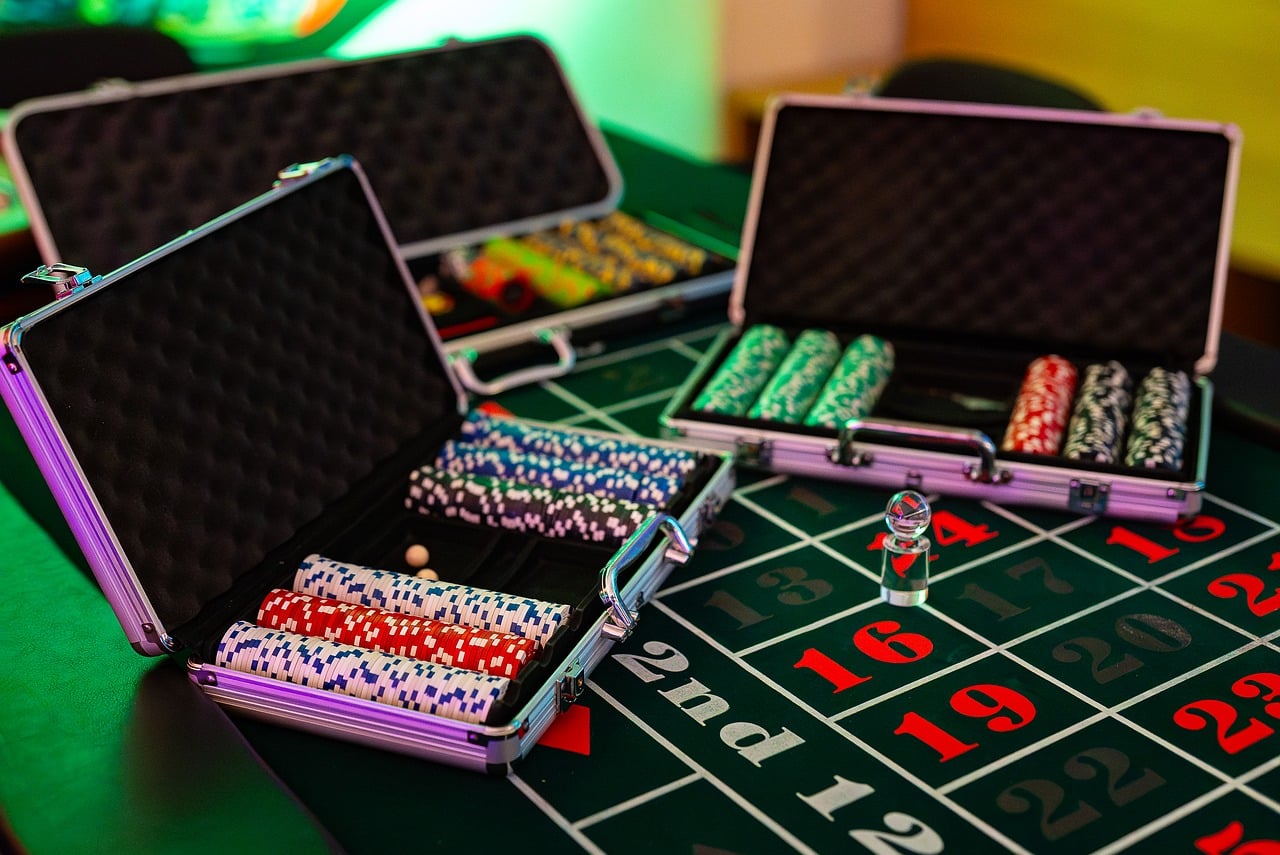
When the cut card appears, the current hand completes and the shoe is closed. The dealer then settles commissions: each numbered commission box is read aloud, the player confirms, and chips are pulled from the player's stack to cover the owed amount. A player intending to leave mid-shoe must signal before the next deal; the dealer pauses to settle that seat's commission and color the player up.
Color-up at a baccarat table follows the same protocol as blackjack: chips pushed forward, counted on camera in stacks of 20, total declared to the floor, consolidated chips returned to the player. Color-up must happen at the table, not the cage, to preserve the casino's per-game tracking. A VIP rolling-chip player additionally has dead chips reconciled by the junket cage at the end of the session, with cashable chips issued for the net win position.
XI. FAQ · Sources · Responsibility
Why does the player not draw a third card by their own choice?
What is the 5% Banker commission for?
What are the 'roads' — big road, big eye, small road, cockroach pig?
What is card-squeezing and why is it allowed?
Are dragon bonus, perfect pair, and other side bets worth taking?
What is the minimum bet in a Macau VIP room?
Sources
- Edward O. Thorp (1984), The Mathematics of Gambling, Lyle Stuart
- Michael Shackleford ("Wizard of Odds"), Baccarat — House Edge and Side Bets, wizardofodds.com
- Macau Gaming Inspection and Coordination Bureau (DICJ), Instruction No. 2/2016 on AML in Junket Operations
- UNLV Center for Gaming Research, Macau Gaming Revenue Annual Report 2024
- Pinnacle Sports, Baccarat Tableau and Optimal Bet Selection, betting resources