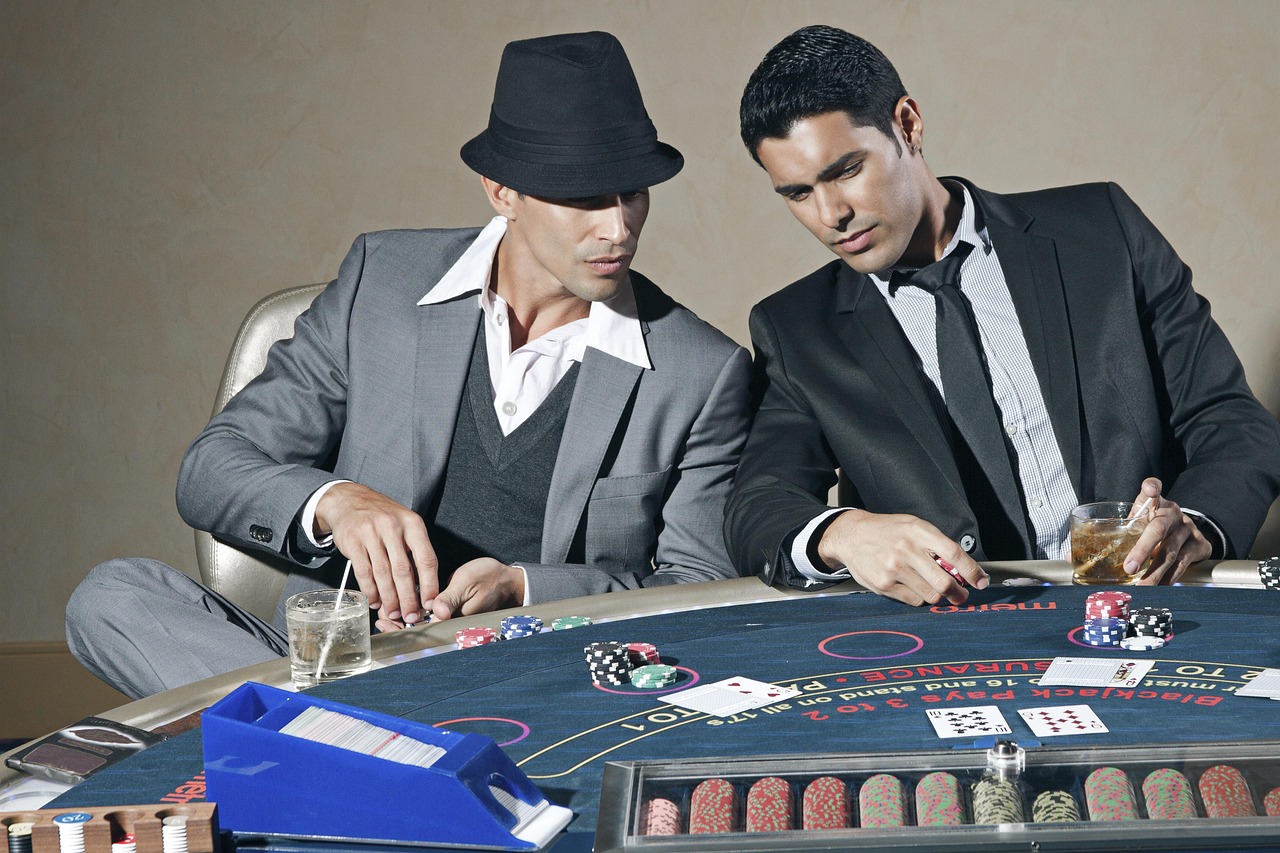
I. Origin — From 15th Century Italy to the Macau VIP Room
The earliest documented baccarat ancestor is the 15th-century Italian game baccara (meaning "zero" — the value of all face cards and tens in the game's scoring system). It crossed the Alps to France around 1490, where it became chemin de fer ("railway") — so named for the slow movement of the shoe from player to player. Two formal variants emerged in 19th-century French casinos: Baccarat Banque (a permanent banker) and Chemin de Fer (rotating banker).
The American version, Punto Banco, was standardized at Havana's Capri Hotel in 1958 by Tommy Renzoni and exported to Las Vegas's Sands in 1959. Punto Banco eliminated player banker rotation — both hands are dealt by the casino, the player only chooses which hand to bet on. This sterile version traveled to Macau in the 1960s and became the dominant Asian table game by 1980. Today over 95% of baccarat played worldwide is Punto Banco.
II. The Rules — Brutally Simple
- Two hands are dealt: Player and Banker. Bettors wager on Player win, Banker win, or Tie.
- Card values: 2-9 face value, 10/J/Q/K = 0, Ace = 1.
- Hand totals are computed modulo 10 (only the units digit counts). A hand of 7 + 8 = 15 → 5.
- If either initial two-card hand totals 8 or 9, that's a "natural" — no further cards dealt, hand wins immediately.
- Otherwise, the third-card rule applies (full table below).
- Hand closest to 9 wins. Banker pays 19:20 (1:1 minus 5% commission). Player pays 1:1. Tie pays 8:1 (or 9:1 in some venues).
The Third-Card Rule (Player)
- Player total 0-5: Draw
- Player total 6-7: Stand
- Player total 8-9: Natural (already won; Banker doesn't draw)
The Third-Card Rule (Banker — depends on Player's third card)
| Banker Total | Draws if Player's 3rd card is... |
|---|---|
| 0-2 | Always draws |
| 3 | Anything except 8 |
| 4 | 2-7 |
| 5 | 4-7 |
| 6 | 6-7 |
| 7 | Always stands |
III. The Mathematics — Why Banker Wins 50.68% of Resolved Hands

Exact probabilities per 8-deck shoe (the standard configuration):
| Outcome | Probability | Payout | House Edge |
|---|---|---|---|
| Banker wins | 45.86% | 1:1 minus 5% commission | 1.06% |
| Player wins | 44.62% | 1:1 | 1.24% |
| Tie | 9.52% | 8:1 | 14.36% |
| (Tie alt. payout) | 9.52% | 9:1 | 4.85% |
Banker's mathematical advantage comes from positional asymmetry: the Banker's third-card decision is made after seeing Player's third card. Banker can adapt; Player cannot. The 5% commission was calibrated in 1959 to leave Banker very slightly less attractive than Player after commission — but the calibration was inexact. Banker's net 1.06% remains marginally better than Player's 1.24%.
IV. The 5% Commission — and Why It Hurts Cash Flow
Standard Banker bet wins pay 1:1 nominally, but 5% of the winnings is owed back to the casino. On a $100 winning Banker bet, the casino pays $95 and tracks the $5 commission in a side compartment. The commission is collected at the end of the shoe, not after each hand — meaning a $100/hand bettor on a six-decision shoe with three Banker wins ends with a $15 commission tab.
Variants:
- EZ Baccarat / No-Commission Baccarat: pays 1:1 on Banker except a winning Banker total of 7 with three cards, which pushes. House edge 1.018% on Banker (slightly better than standard 1.06%), but adds the "Dragon 7" side bet (Banker wins with three-card 7), which carries ~7.6% house edge — the side bet is where the casino recovers its commission income.
- Lucky Six / 6 Trick: Banker wins with a 6 pays 0.5:1. House edge on Banker rises to 1.46%.
The 5% commission is universal in Macau, Las Vegas, Atlantic City. No-commission tables exist mostly as a marketing variant in California Indian casinos and parts of Asia.
V. Why Baccarat Dominates Macau
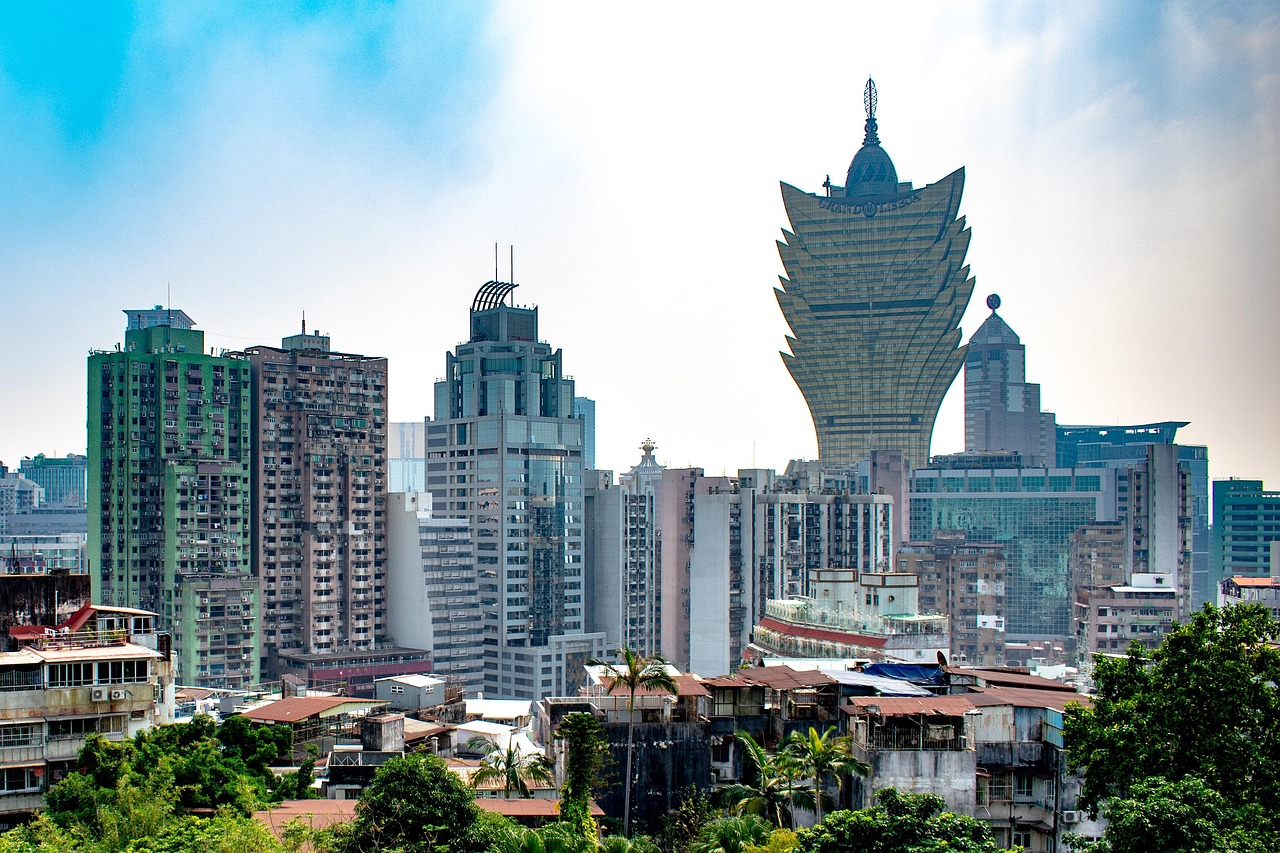
According to Macau's Direcção de Inspecção e Coordenação de Jogos (DICJ), baccarat (combined Punto Banco + minor variants) accounts for:
- 88% of Macau's total HK$207 billion table-game revenue in 2023
- 96%+ of VIP-room revenue (high-stakes rooms exclusively offer baccarat)
- Average VIP single-bet size: HK$25,000-HK$200,000
- Top single-bet record (verified): HK$10 million per hand at Wynn Macau, 2015
The cultural-mathematical-structural triad — game of pure chance, high-bet ceiling, junket-room dead-chip economics — created a flywheel that no Macau operator has been able to break. Sands China's repeated attempts to push craps or roulette to Asian whales have all failed; the whales return to baccarat tables within minutes.
VI. The "Derived Roads" — Sophisticated Superstition
Macau-style baccarat displays six "roads" (路 / lù) on overhead screens, tracking shoe history:
- 珠路 (Bead Plate) — raw results in a 6-row grid, red = Banker, blue = Player, green = Tie
- 大路 (Big Road) — collapsed display showing streaks of same outcome stacked vertically
- 大眼路 (Big Eye Road) — derived from Big Road, indicates whether the current shoe is "regular" or "choppy"
- 小路 (Small Road) — alternative derivation with different shift parameter
- 曱甴路 (Cockroach Pig) — third derived road
- Tie Marks — overlay of ties on whichever road is displayed
The mathematics: each hand is independent (the shoe penetration that would allow card-counting analysis is too shallow — typically 75% before reshuffle). The roads describe pattern, not probability. Treating them as predictive is the cluster illusion — the human tendency to perceive patterns in random data.
And yet the roads remain. Why? Because they keep players betting longer (Macau studies show 20-30% session-length increase when roads are visible), which is exactly what the casino wants.
VII. Edge Sorting — The Phil Ivey Case
In 2012, professional gambler Phil Ivey won £7.7 million at Crockfords Casino (London) playing punto banco. His method, executed with partner Cheung Yin Sun: identifying a manufacturing defect in Gemaco brand cards where the diamond pattern on the back was slightly asymmetric. By asking the dealer to rotate certain high-value cards (8s and 9s) 180° before reinserting them in the shoe — under the pretext of "superstition" — Ivey could later identify those cards by their orientation, gaining a 6.7% edge on Player bets.
Crockfords refused to pay. Ivey sued. The UK High Court ruled in Crockfords' favor (2014), upheld by Court of Appeal (2016) and Supreme Court (2017): edge sorting constituted "cheating" under the Gambling Act 2005 even though Ivey did not handle the cards. Lesson: the legal boundary of "advantage play" is jurisdiction-specific and ill-defined. Ivey separately lost a US case at Borgata for $10.1 million using the same technique.
VIII. Online Baccarat — Live Dealer vs RNG
Two formats dominate online:
- RNG baccarat: Each hand uses fresh shuffle; pace 200-400 hands/hour; house edge identical to physical (Banker 1.06%). Common at NetEnt, Evolution, Microgaming.
- Live-dealer baccarat: streamed from Manila / Bucharest / Riga; pace 70-90 hands/hour; identical rules. Evolution Gaming dominates with 70%+ Asian market share. Bet ranges from $1 to $500,000+ on dedicated VIP tables.
The 2020-2024 pandemic accelerated online baccarat — Macau visitor numbers fell from 39 million (2019) to 5.8 million (2020); meanwhile online baccarat GGR (Asia-licensed) tripled. Recovery has been partial: 2023 Macau visitor count was 28 million; combined online baccarat from Asian players still exceeds 2019 levels.
IX. Common Misconceptions
- ❌ "Following the trend boards is profitable." Patterns in random sequences are not predictive. The boards exist to extend session length, not to help you win.
- ❌ "I should switch from Banker to Player after a Banker streak." Each hand is independent. The next hand's Banker probability remains 45.86% regardless of prior outcomes.
- ❌ "Tie pays 8:1, so it's worth taking occasionally." 14.36% house edge says no.
- ❌ "Counting cards works in baccarat." Theoretically yes — practically no. The optimal counting system gains under 0.005 cents per dollar bet, far below table minimum and worth less than the time spent.
X. FAQ · Sources · Responsibility
Why does Banker have a lower house edge than Player?
Is the 'Tie' bet ever worth taking?
Does the third-card rule create any opportunity for skill?
Why is baccarat 88% of Macau's table revenue?
What are 'derived roads' and trend boards in baccarat?
Mini-baccarat, midi, and full table — what's the difference?
Sources
- Macau DICJ, Gross Gaming Revenue Quarterly Report Q4 2023
- Edward O. Thorp & W.E. Walden (1973), The Optimal Strategy for Casino Baccarat, IJGT
- Ivey v. Genting Casinos UK Ltd [2017] UKSC 67, UK Supreme Court
- UNLV Center for Gaming Research, Baccarat & the Asian High-Roller Market
- Tommy Renzoni (1973), Renzoni on Baccarat, Lyle Stuart