I. Why Roulette Has Two Different Wheels
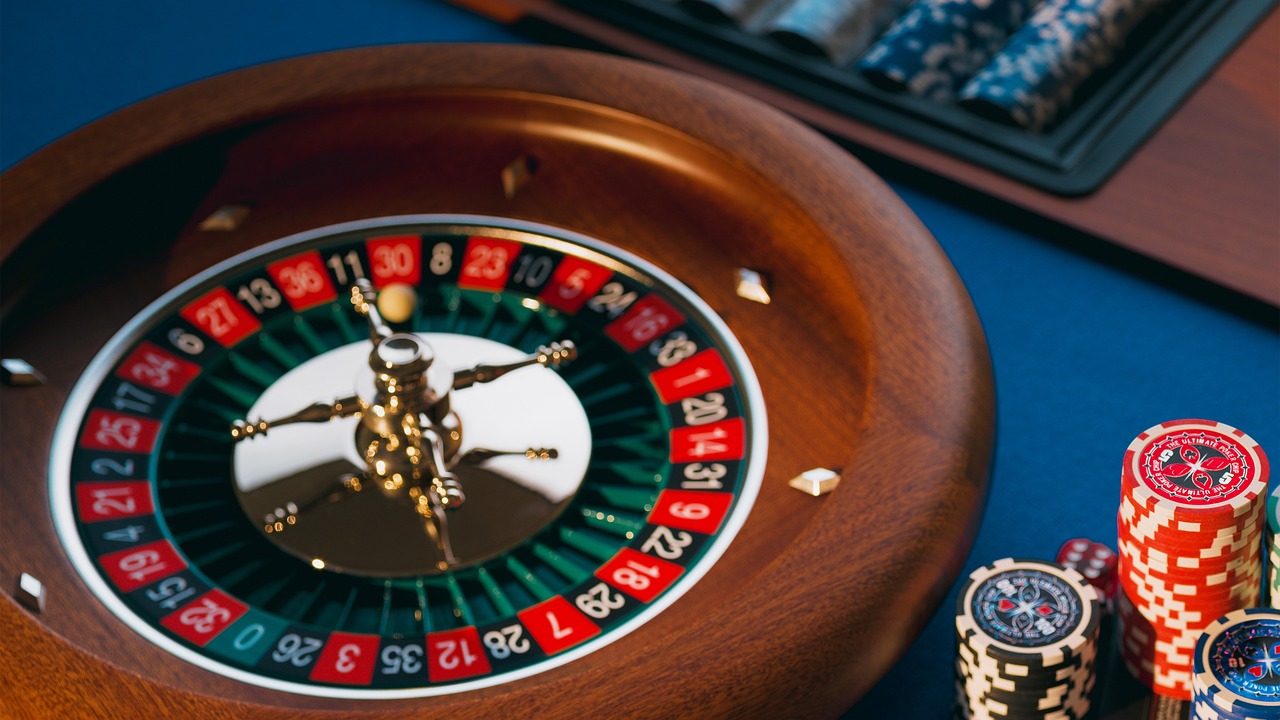
The original roulette wheel — invented in 17th-century Paris and refined by François and Louis Blanc at Bad Homburg in 1843 — has 37 pockets: the numbers 1 through 36 plus a single zero. When the game crossed the Atlantic to riverboat gambling in the 1840s, American operators added a second zero pocket (00) to increase house revenue. The result is two persistent wheel layouts that coexist on every casino floor in the world: the European (single zero, 37 pockets) and the American (double zero, 38 pockets).
The procedural difference is one pocket. The mathematical difference is dramatic. Every payout — straight-up 35:1, split 17:1, street 11:1, and so on — is calibrated to the European odds. The American wheel pays the same returns but on 38 pockets instead of 37, so the casino captures an additional 1/38 of every wager. Translated: house edge 2.70% on European, 5.26% on American. A 2018-era variant, Sands Roulette, adds a third 'S' pocket and pushes the edge to 7.69%.
II. The Wheel Layout and the Order of Numbers
The numbers around the wheel are not in numerical order; they are arranged to alternate red/black and balance high/low and odd/even across the wheel. The European order, starting at 0 clockwise, is: 0, 32, 15, 19, 4, 21, 2, 25, 17, 34, 6, 27, 13, 36, 11, 30, 8, 23, 10, 5, 24, 16, 33, 1, 20, 14, 31, 9, 22, 18, 29, 7, 28, 12, 35, 3, 26. This is the canonical 'Roulette Française' sequence. The American wheel has its own distinct order with 0 and 00 placed opposite each other.
The arrangement matters procedurally because the French announced bets are defined by physical wheel sectors, not by the layout grid. A 'Voisins du Zéro' bet covers neighbouring pockets on the wheel — numbers that may be scattered on the betting layout.
III. The Betting Layout — Inside, Outside, and Racetrack
The roulette layout has three zones:
- Inside bets — straight numbers and combinations of 2-6 adjacent numbers. Higher payouts (5:1 to 35:1), lower hit frequency.
- Outside bets — categories of 12-18 numbers: column, dozen, red/black, odd/even, high/low. Lower payouts (1:1 to 2:1), higher frequency.
- Racetrack (French tables only) — an oval representation of the wheel order, used for placing announced bets that span wheel sectors.
Every chip must be placed within the printed lines of the desired bet. A chip on the line between two numbers is a split; on a corner is a corner bet; at the end of a row is a street; spanning two rows at the end is a six-line. Misplaced chips are usually pushed by the croupier to the bet she believes you intended, with a verbal confirmation. After 'no more bets,' the layout is frozen.
IV. The French Announced Bets — Croupier Pre-Stacked Calls
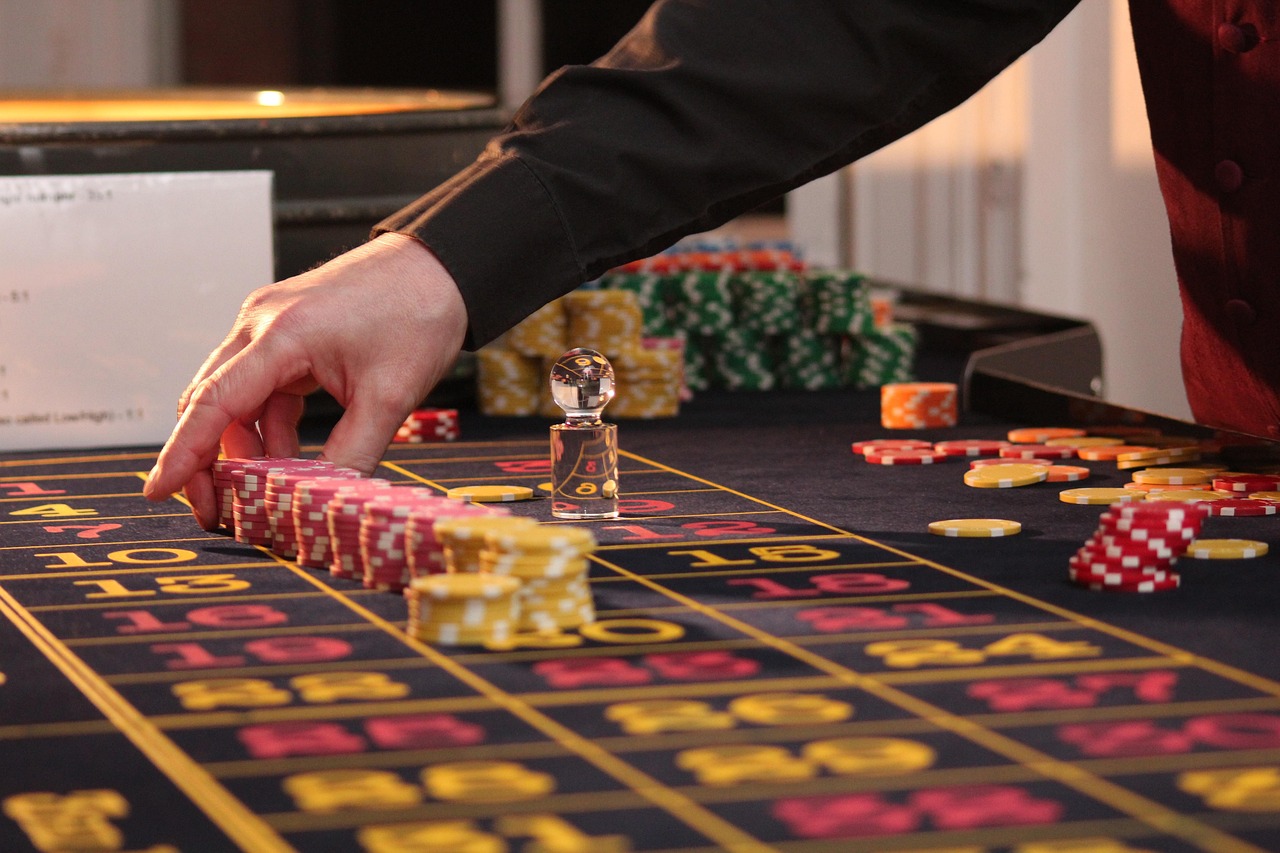
Announced bets are spoken bets on physical wheel sectors. The player calls them and slides chips to the croupier, who pre-stacks the bet on the racetrack (and on the inside layout) according to a fixed pattern.
- Voisins du Zéro — 'neighbours of zero.' Covers 17 numbers: 22-18-29-7-28-12-35-3-26-0-32-15-19-4-21-2-25. Total stake: 9 chips, distributed as 2 chips on the 0-2-3 trio, 1 each on 4-7 split, 12-15 split, 18-21 split, 19-22 split, 32-35 split, and 2 chips on the 25-26-28-29 corner. House edge: 2.70%.
- Tiers du Cylindre — 'third of the cylinder.' Covers 12 numbers opposite zero: 27-13-36-11-30-8-23-10-5-24-16-33. Total: 6 chips on 6 splits. House edge: 2.70%.
- Orphelins — 'orphans.' Covers the 8 numbers not in Voisins or Tiers: 17-34-6 (one chunk) and 1-20-14-31-9 (the other). Total: 5 chips. House edge: 2.70%.
- Jeu Zéro — 'zero game.' Smaller cluster around zero: 12-35-3-26-0-32-15. Total: 4 chips. House edge: 2.70%.
- Finales — bets on all numbers ending in the same digit. 'Finale 4' covers 4, 14, 24, 34 (4 chips, straight bets).
Announced bets do not change the house edge; they are conveniences for players who want to cover specific wheel patterns without manually placing 5-9 chips.
V. La Partage and En Prison — Halving the Edge
On a European wheel, when 0 hits, all inside bets that did not cover 0 lose. The exception is even-money outside bets (red/black, odd/even, high/low). Two procedural rules can reduce the loss:
- La Partage — when 0 hits, half the even-money bet is returned to the player; the other half is lost. Reduces house edge on red/black etc. from 2.70% to 1.35%.
- En Prison — when 0 hits, the even-money bet is 'imprisoned' (the croupier places a marker on it). On the next spin: if the bet wins, the original stake is returned (no profit); if it loses, the full bet is forfeit. The house edge effect is the same 1.35% under expected value.
La Partage is the modern French and Monte Carlo standard. En Prison persists in some German and Eastern European houses. Both must be printed on the felt or in the table placard — verify before placing a large even-money bet.
VI. Payout Table — The Full Schedule
| Bet | Numbers covered | Payout | European edge | American edge |
|---|---|---|---|---|
| Straight up | 1 | 35:1 | 2.70% | 5.26% |
| Split | 2 | 17:1 | 2.70% | 5.26% |
| Street | 3 | 11:1 | 2.70% | 5.26% |
| Corner | 4 | 8:1 | 2.70% | 5.26% |
| Six-line | 6 | 5:1 | 2.70% | 5.26% |
| Column | 12 | 2:1 | 2.70% | 5.26% |
| Dozen | 12 | 2:1 | 2.70% | 5.26% |
| Even-money | 18 | 1:1 | 2.70% | 5.26% |
| Even-money with La Partage | 18 | 1:1 (half-back on 0) | 1.35% | n/a |
| Top line (American only) | 5 (0,00,1,2,3) | 6:1 | n/a | 7.89% |
The American 'top line' bet — covering 0, 00, 1, 2, and 3 — is the worst standard bet in roulette at 7.89% house edge. Avoid it.
VII. Chip Color-Coding and Buy-In Procedure
Roulette uses non-value, table-specific chips. When you buy in, the croupier asks the denomination (e.g. '$5 chips'), pulls a stack of one color from the rack, and slides them to you. The color identifies your bets on the layout; the denomination is recorded on a marker placed atop a stack of the same color in the dealer's tray.
Each roulette table supports 8 colors — one per seat. Larger tables add stripe patterns. Sharing a color is not permitted (it would make bet ownership ambiguous on the camera).
Roulette chips are not redeemable at the cage. To leave, you must color-up: push your remaining chips to the croupier, who counts them, calculates the cash value, and exchanges them for cashable casino chips. This must happen at the table before you stand up. Failure to color-up results in chips that are worthless outside that specific table.
VIII. The Spin, the Call, and the Dolly
The croupier spins the wheel in one direction and the ball in the opposite direction. Once the ball has completed several revolutions and begins to slow, the croupier announces 'no more bets' (or 'rien ne va plus' in French) and waves a flat horizontal palm over the layout. After this gesture, the layout is frozen.
The ball drops into a pocket. The croupier identifies the winning number, places the dolly (a marker, usually a small acrylic crown) on the winning number on the layout, and clears all losing chips. Winning bets are then paid in order — outside bets first, inside bets second, announced bets last. The dolly is removed only when payouts are complete, after which betting reopens.
Touching the layout while the dolly is in place voids any subsequent bet on that number and may be treated as past-posting under Nevada NRS 465.070.
IX. Wheel Calibration and Bias Detection
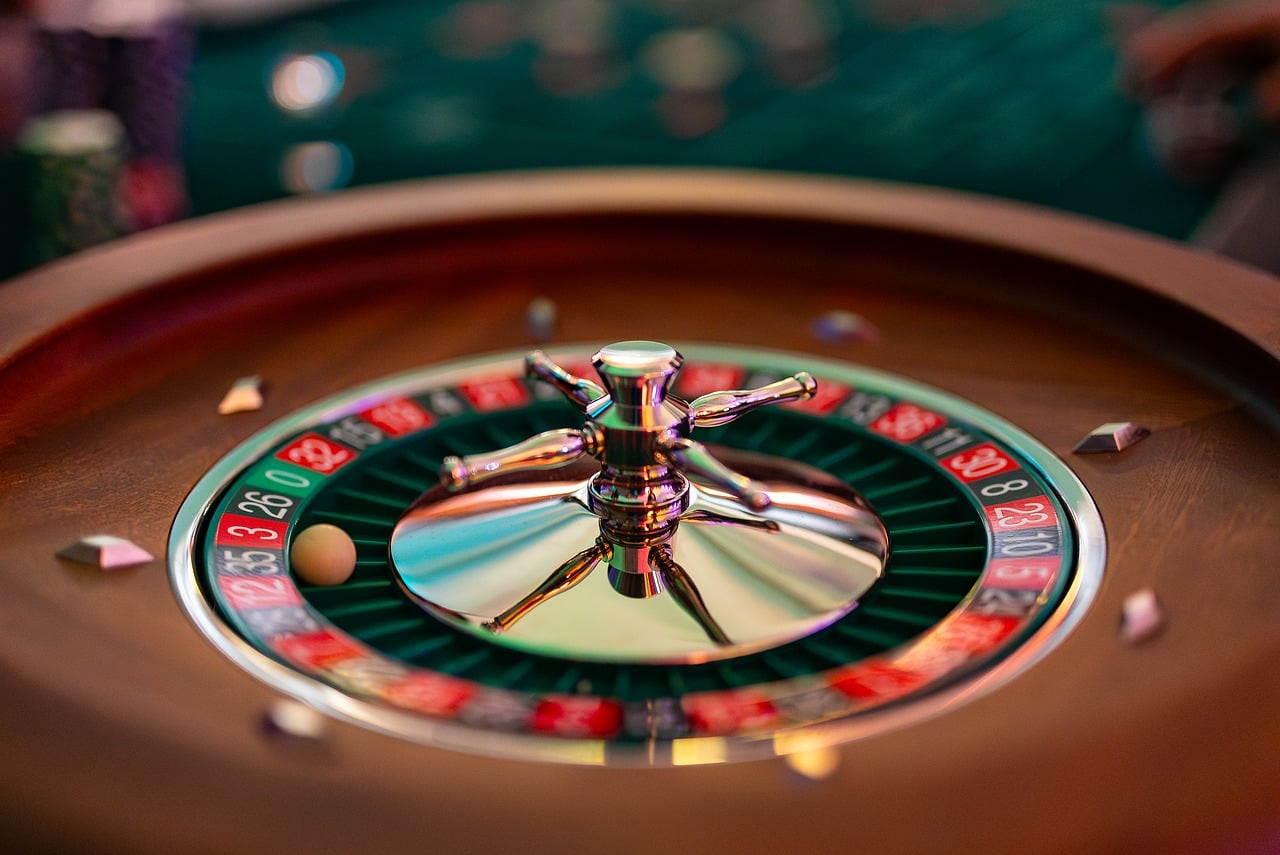
A roulette wheel is a precision instrument. Modern casinos maintain wheels under a strict protocol:
- Weekly leveling — the wheel base is checked with a precision spirit level. A tilt of more than 0.5° creates exploitable bias.
- Bearing test — the rotor is spun and timed; modern wheels free-spin for 8-12 seconds. Shorter times indicate bearing wear.
- Fret inspection — the dividers between pockets are checked for wear. A flattened fret directs the ball to a specific pocket.
- Result-frequency monitoring — modern surveillance logs every winning number. Any pocket hitting more than ~3-4 standard deviations from expected over a 10,000-spin window triggers a wheel pull.
Joseph Jagger broke the Monte Carlo bank in 1873 by mapping pocket frequencies on a biased wheel. Modern monitoring makes that exploit nearly impossible — but the procedural discipline of bias detection is itself a permanent legacy of his attack.
X. FAQ · Sources · Responsibility
Why is European roulette so much better than American roulette?
What are the French announced bets — Voisins, Tiers, Orphelins?
What is La Partage and En Prison?
Why are my roulette chips different from everyone else's?
When exactly does 'no more bets' apply?
Do casinos still check for wheel bias?
Sources
- Michael Shackleford ("Wizard of Odds"), Roulette Bets and House Edges, wizardofodds.com
- Snowberg & Wolfers (2010), Explaining the Favorite-Longshot Bias, Journal of Political Economy
- Kahneman & Tversky (1979), Prospect Theory: An Analysis of Decision Under Risk, Econometrica
- Nevada Gaming Control Board, Regulation 5.110 and Minimum Internal Control Standards
- UNLV Center for Gaming Research, Roulette Wheel-Bias Detection Standards 2023