I. Origin — Pascal, the Wheel, and the Pursuit of Perpetual Motion
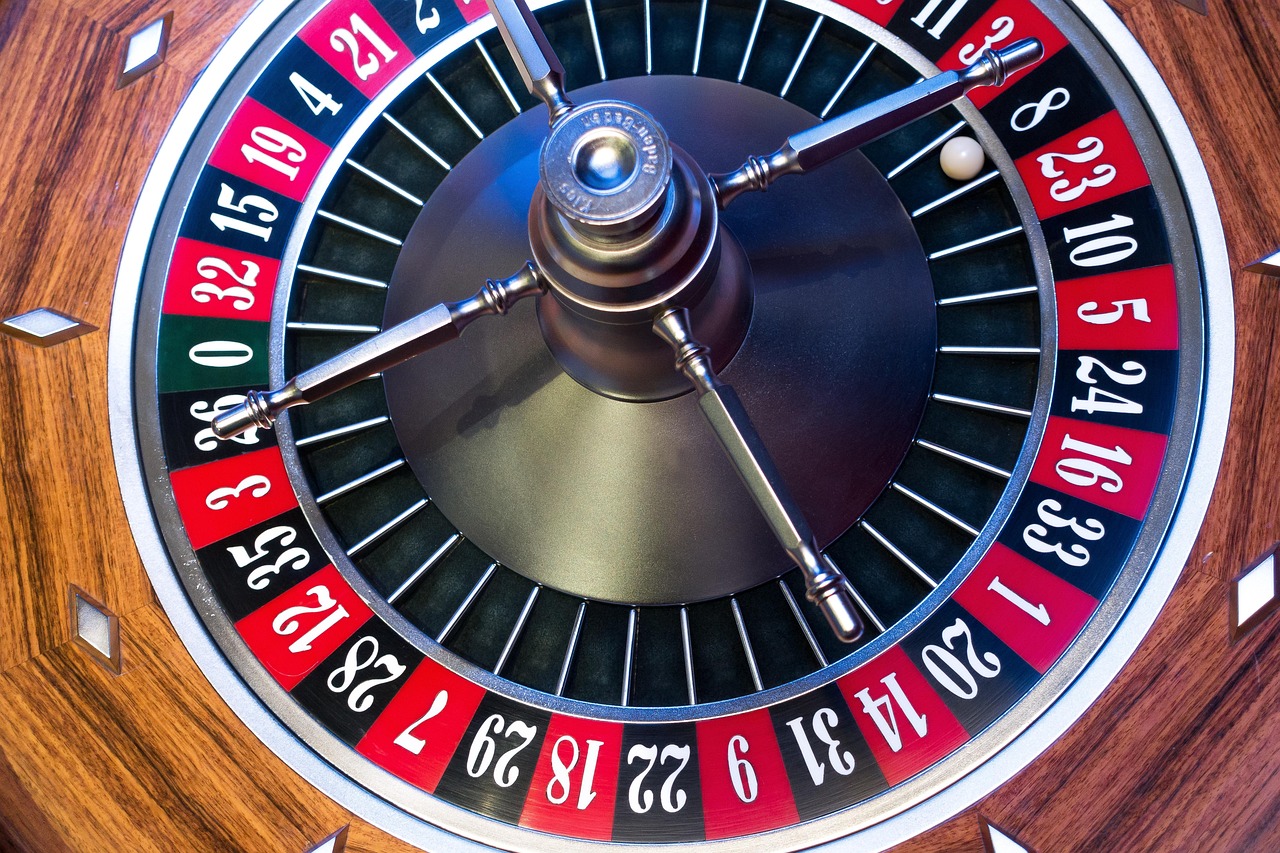
The roulette wheel was invented (in essence) in 1655 by Blaise Pascal as a byproduct of his attempt to design a perpetual-motion machine. The bidirectional spinning rotor — wheel one way, ball the opposite — turned out to be unsuitable for energy generation but perfectly suited to gambling. By 1796 a recognizable roulette table with the modern wheel layout was operating at the Palais-Royal in Paris.
The original wheel had both 0 and 00 — identical to today's American wheel. In 1843, the brothers Louis and François Blanc removed the 00 to create the modern European wheel for the German spa-casino at Bad Homburg, halving the house edge and attracting players away from rival casinos. The Blancs later founded Monte Carlo's Casino de Monte-Carlo in 1863, exporting their single-zero standard across Europe.
The double-zero wheel migrated to the United States with French emigrants during the early 19th-century Mississippi-River casino era, becoming the American standard.
II. The Wheel — Geometry of the Pockets
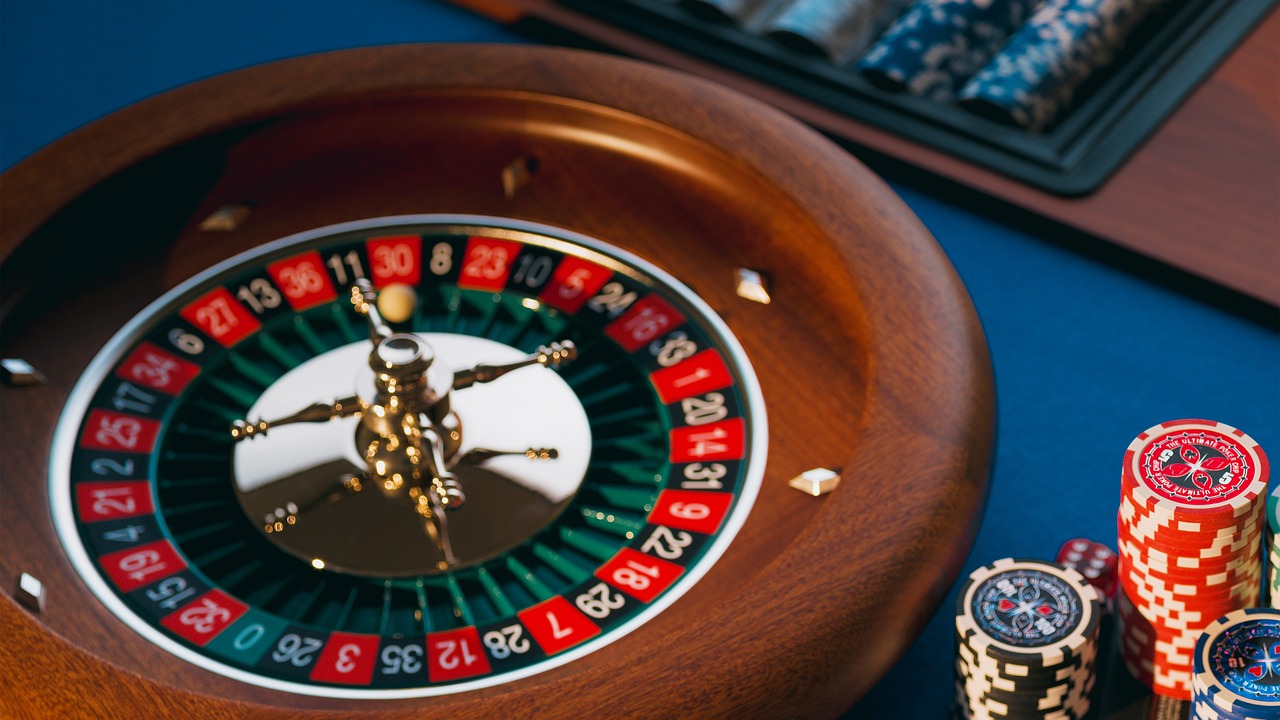
The numbering on the wheel is not sequential. It is engineered to maximize randomness from any physical wheel imperfection:
- Red/black alternation — every other pocket alternates color (excepting 0)
- Odd/even balance — high odd and high even numbers are distributed across the wheel
- Sum of adjacent pairs — opposite pockets typically sum to 37 or 38 (on European/American respectively)
- Diametrically opposite are always one odd + one even
This sequence is the same on all standardized casino wheels:
- European (single-zero): 0, 32, 15, 19, 4, 21, 2, 25, 17, 34, 6, 27, 13, 36, 11, 30, 8, 23, 10, 5, 24, 16, 33, 1, 20, 14, 31, 9, 22, 18, 29, 7, 28, 12, 35, 3, 26
- American (double-zero): 0, 28, 9, 26, 30, 11, 7, 20, 32, 17, 5, 22, 34, 15, 3, 24, 36, 13, 1, 00, 27, 10, 25, 29, 12, 8, 19, 31, 18, 6, 21, 33, 16, 4, 23, 35, 14, 2
III. The Betting Layout — Inside and Outside
| Bet Type | Numbers Covered | Payout | House Edge (Euro) |
|---|---|---|---|
| Straight up (single) | 1 | 35:1 | 2.70% |
| Split | 2 adjacent | 17:1 | 2.70% |
| Street (3 in a row) | 3 | 11:1 | 2.70% |
| Corner / Square | 4 | 8:1 | 2.70% |
| Line / Six-number | 6 | 5:1 | 2.70% |
| Dozen (1-12 / 13-24 / 25-36) | 12 | 2:1 | 2.70% |
| Column | 12 | 2:1 | 2.70% |
| Red / Black | 18 | 1:1 | 2.70% |
| Odd / Even | 18 | 1:1 | 2.70% |
| High (19-36) / Low (1-18) | 18 | 1:1 | 2.70% |
| Even-money + La Partage | 18 | 1:1 (lose half on 0) | 1.35% |
The single house edge (2.70%) appears in every bet because the 0 pocket "steals" the same fraction of expected value across all betting structures. Mathematicians call this the "fair-payoff deficit" — straight-up pays 35:1 but the true odds are 36:1 (37 pockets minus the winner). The 1-pocket difference is the casino's 2.70%.
IV. The Math — Why 2.70% Is the Same on Every Bet
Consider straight-up on European wheel:
- Win probability: 1/37 ≈ 0.0270
- Pay on win: 35 × bet
- Lose probability: 36/37 ≈ 0.973
- Expected value: (1/37)(35) + (36/37)(−1) = (35 − 36)/37 = −1/37 = −2.70%
Consider red:
- Win probability: 18/37 ≈ 0.4865
- Pay on win: 1 × bet
- Lose probability: 19/37 ≈ 0.5135
- Expected value: (18/37)(1) + (19/37)(−1) = −1/37 = −2.70%
The −1/37 fraction is invariant. It is the percentage of all spins that land on 0, scaled by the unit-bet loss. Every roulette bet is the same long-run trade.
V. French Roulette — La Partage and En Prison
French roulette tables (predominantly at Monte Carlo, Casino Barrière chain, some London Mayfair clubs) include two player-favorable rules on even-money bets when 0 hits:
- La Partage ("the sharing"): Player loses half stake on 0. House edge on red/black, odd/even, high/low = 1.35%.
- En Prison: Player's stake is held for one more spin. Win on the second spin returns the original stake (no profit); loss = total loss. Mathematically equivalent house edge to La Partage when applied identically.
These rules halve the cost of even-money bets — making French roulette one of the lowest-edge bets in any casino, narrowly beaten only by basic-strategy blackjack and certain video-poker pay tables.
VI. Famous Strategies and Why They All Fail
- Martingale: Double after every loss on even-money bets. Mathematically: works until you hit the table maximum (typically $5,000 on a $10 table = 9 doublings) or your bankroll. Probability of 9 consecutive losses on red ≈ 0.5135⁹ ≈ 0.0017 — happens once every 600 spins. When it does, you lose $5,110 trying to recover $10.
- D'Alembert: Increase by 1 unit after loss, decrease by 1 after win. Smoother bankroll curve, but identical long-run house edge.
- Fibonacci: Bet according to Fibonacci sequence. Same 2.70%.
- Labouchère / Cancellation: Cross off numbers after wins, add after losses. Same 2.70%.
The pattern: no betting system can change the house edge, because each spin is independent and 2.70% is built into every wager. The only mathematical winning strategy is biased-wheel exploitation (now extinct on modern wheels) or computer prediction (now criminalized).
VII. The Biased-Wheel Era (1873-1991)
Three documented million-dollar exploitations of mechanical wheel bias:
- Joseph Jagger (1873, Monte Carlo) — Yorkshire engineer paid six clerks to record every spin on six wheels for several weeks. Identified wheel 4 had a slight tilt favoring 9 numbers. Bet those numbers exclusively, winning £65,000 (≈ $7.5M in today's value). The casino restored balance by rotating wheels nightly.
- Billy Walters (1986, Atlantic City) — Tracked thousands of spins, identified bias at the Golden Nugget, won approximately $3.8M before casinos noticed and changed wheels.
- Gonzalo Garcia-Pelayo (1992, Madrid Casino Gran Madrid) — Logged 24,000+ spins per wheel, fed data to a statistical program; identified six biased wheels. Won approximately €1.5M over five years. Subsequently sued for "cheating" but Spanish courts ruled the technique legal.
By 2000, manufactured wheels achieved tolerances under 0.05mm; biased-wheel exploitation became essentially impossible. The casino's wheelscan software flags any 1.5%+ pocket deviation across 5,000 spins for immediate maintenance.
VIII. Online Roulette and Live-Dealer Variants
Online roulette splits into two domains:
- RNG roulette — each spin a fresh PRNG sample; mathematically equivalent to a perfect physical wheel; pace 400-600 spins/hour. Speed is the casino's hidden weapon — at 600 spins/hour with $10 bets, expected loss on European is $162/hour; on American $315/hour.
- Live-dealer roulette — Evolution Gaming's "Immersive Roulette" and "Lightning Roulette" dominate. Real wheel, real dealer, multi-camera angle, streamed from Riga / Manila / Bucharest. Lightning Roulette adds random multipliers (50x-500x) on selected straight-up numbers, attractive marketing but worse mathematics (house edge rises to 2.93% on single-number bets, 3.10% on multipliers).
IX. Famous Roulette Spins in History
- August 18, 1913 — Monte Carlo "Black 26": Black hit 26 consecutive times on a single wheel. Players lost millions betting red, convinced "red is due." Each spin remained independent at 48.6% red probability. The textbook gambler's fallacy demonstration.
- 2004 — Ashley Revell at Plaza Las Vegas: 32-year-old British man sold everything he owned ($135,300) and bet it all on red. Won. Walked away with $270,600.
- 2016 — Pedro Grendene Bartelle, Hotel Conrad Punta del Este: Brazilian businessman bet $100,000 on straight-up 32 (his lucky number). Won $3.5M at 35:1.
X. FAQ · Sources · Responsibility
European vs American roulette — how big is the difference?
What is 'En Prison' and 'La Partage'?
Does the 'gambler's fallacy' apply to roulette?
Can biased wheels actually be exploited?
What about computer prediction of the ball's landing?
Which bet has the lowest house edge?
Sources
- Edward O. Thorp (1969), Optimal Gambling Systems for Favorable Games, Review of the International Statistical Institute
- Cammegh Wheelscan Technical Documentation, 2023 Edition
- Nevada Revised Statutes §465.075, Use of Device to Determine Outcomes
- Gonzalo Garcia-Pelayo (2009), La Fabulosa Historia de los Pelayos, RBA Libros
- Casino de Monte-Carlo, Histoire d'une institution: 1863-2013