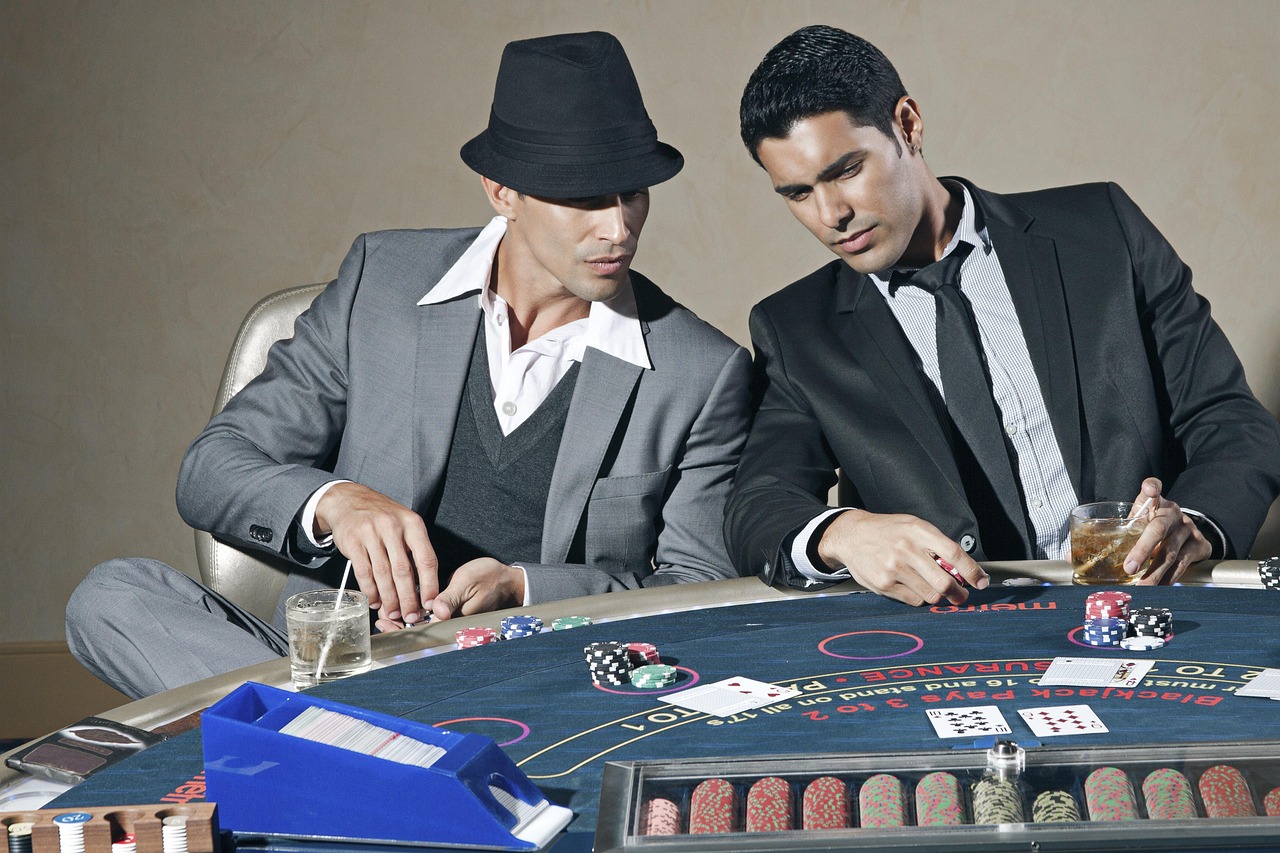
Bellagio, Wynn, Cosmopolitan and Aria have quietly converted most low-limit blackjack tables from 3:2 to 6:5 naturals. The popular reading — 'casinos got greedy' — misses the actual driver. The shift is a clean piece of operations math on per-table-hour win, against a backdrop of mass-market floor erosion to slots.
The math: a four-times house-edge expansion, hidden in a payout line
Blackjack's natural — an ace plus any ten-value card on the first two cards — pays at a posted rate. A 3:2 game pays $15 on a $10 wager when the player draws a natural. A 6:5 game pays $12 on the same wager. The difference is three dollars per natural, but naturals occur on about 4.8% of opening hands, and that frequency compounds across every hand the player ever plays at that table.
Compounded back into the basic-strategy player's expected loss, the house edge moves from approximately 0.5% (six-deck, H17, DAS, 3:2 naturals) to approximately 1.95% on the same rules with 6:5. That is a 3.9× expansion of the price of every hand — applied to every hand, including the 95.2% that never involved a natural at all.
| Naturals 3:2 | House edge ≈ 0.50% |
|---|---|
| Naturals 6:5 | House edge ≈ 1.95% |
| Edge expansion | ≈ 3.9× |
| $25/hand, 80 hands/hr — 3:2 | −$10/hr expected |
| $25/hand, 80 hands/hr — 6:5 | −$39/hr expected |
| $100/hand, 80 hands/hr — 6:5 | −$156/hr expected |
The economics: per-table-hour win is the operator's actual KPI
Where 3:2 still lives
- Strip high-limit rooms: Bellagio Bobby's Room, Wynn high-limit salon, Aria high-limit pit — 3:2 retained at $100/$200/$500 minimums for premium-mass and VIP play.
- Downtown Las Vegas: El Cortez, Plaza, The D, Main Street Station — 3:2 at $5–$10 minimums remains widely available; this is the locals/value Strip alternative.
- Off-Strip locals chains: Station Casinos (Red Rock, Green Valley Ranch, Suncoast, Boulder Station) preserve 3:2 across their blackjack inventory as a deliberate competitive position against the Strip.
- Single-deck and double-deck pitch games: where 3:2 survives on the Strip in mid-limit, it's often paired with 6-deck shoe games at 6:5 — operators use deck count to segment the price book within one room.
What this connects to
The Strip's 6:5 conversion is the same family of move as Macau's growing concentration in baccarat — operators rebalancing table inventory toward whichever game produces the most win per square foot, with player-side rule changes baked in as the price-lever. The two markets are structurally divergent (Macau goes single-game; Strip goes opaque-pricing) but the underlying operator math is the same.
Is 6:5 the only rule that affects blackjack house edge?
No. Naturals payout is the single largest house-edge lever, but deck count, hit/stand on soft 17 (H17 vs S17), double-after-split (DAS), surrender, and re-splitting aces all move the number. A 3:2 single-deck H17 no-DAS game can have a higher house edge than a 6:5 six-deck S17 DAS game on paper — but in practice most Strip 6:5 tables stack player-unfriendly rules on top of 6:5, compounding the edge.
Does counting cards still work against 6:5?
Counting cards exploits the increased frequency of naturals when a shoe goes ten-rich. Because 6:5 cuts the natural payoff by 20%, the value of every counting advantage is also cut by about 20%. Combined with continuous shuffle machines and aggressive pen levels on the Strip, 6:5 has functionally retired card counting as a strategy against most low- and mid-limit Strip blackjack.
Will 7:5 or 1:1 naturals spread next?
Some Strip and regional properties are already field-testing 7:5 (house edge ~1.2%) and 1:1 (house edge ~2.3%). 1:1 is widely considered the line a player should never sit down at. The proliferation of payout-rate variation is a form of segmented pricing — operators using payout structure to discriminate across player tolerance for opacity.