I. Origin — Why the Shoe Exists
Pre-1925, blackjack was dealt by hand from a single deck. The dealer shuffled, dealt, and re-shuffled — pace was ~80 hands per hour. As game pace and stakes increased through the 1920s, single-deck dealing became infeasible:
- Frequent reshuffles slowed play
- Dealer fatigue led to errors and slow dealing
- Skilled players could track sequences by remembering recently played cards
John Scarne — a famed gambling consultant and stage magician — introduced the multi-deck shoe in 1925, allowing the dealer to draw from 4-8 decks of pre-shuffled cards continuously. The shoe immediately solved three problems: ① no reshuffling for hundreds of hands; ② impossible to track sequences across thousands of cards; ③ standardized dealer pace (~70-100 hands/hour).
The shoe became standard at all multi-deck blackjack tables by 1940 and at baccarat by 1960. The modern manual shoe is virtually unchanged from Scarne's design.
II. The Manual Shoe — Mechanics and Specifications
| Specification | Value |
|---|---|
| Material | Wood, acrylic, or polished metal |
| Deck capacity | 4, 6, or 8 decks (208, 312, or 416 cards) |
| Wedge angle | 15-25° (allows top-card access) |
| Slide surface | Low-friction plastic + anti-static coating |
| Internal dimensions tolerance | ±0.5mm (so cards slide one at a time) |
| Typical lifespan | 5-7 years |
| Cost per unit | $300-$2,500 |
The shoe has three components: the chamber (holds the decks), the slide (where the dealer's finger pulls cards), and the tray (catches dealt cards before they're moved to the table). Cards exit the shoe face-down; the dealer flips them based on game rules (face-up for player, face-down for dealer's hole card).
III. Penetration — The Card Counter's Holy Grail
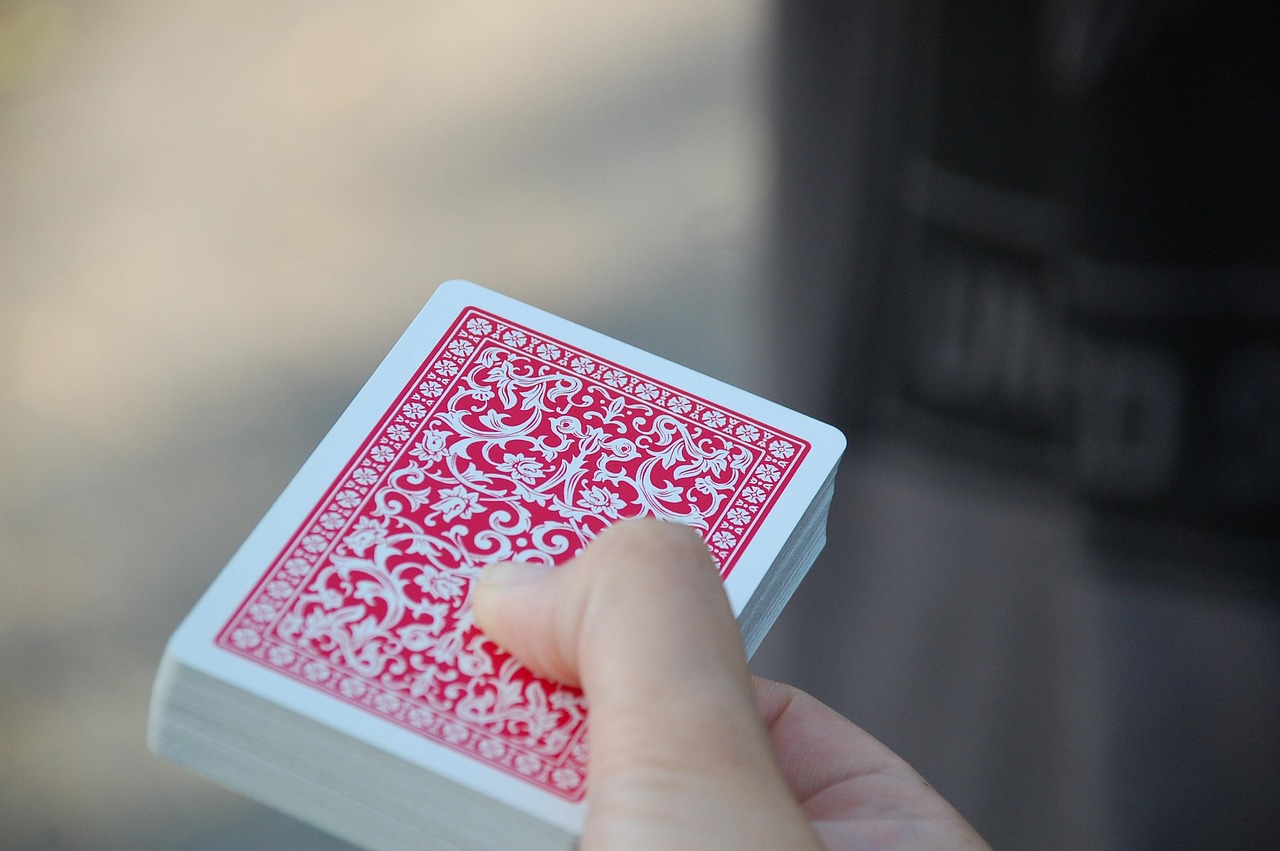
"Penetration" is the percentage of the shoe dealt before the cut card triggers a reshuffle.
| Penetration | Deck Composition Information | Card-Counting Value |
|---|---|---|
| 50% (3 decks of 6) | Limited late-shoe visibility | Marginal — high-count windows rare |
| 60% (3.6 decks) | Some late-shoe value | Modest — playable for skilled counter |
| 70% (4.2 decks) | Significant late-shoe value | Good — meaningful advantage |
| 75-80% (4.5-4.8 decks) | Strong late-shoe visibility | Excellent — counters' target |
| 90%+ (rare) | Maximum value | Optimal but flags surveillance |
The math: card counting profitability scales roughly linearly with penetration. Doubling penetration from 50% to 80% triples or quadruples the expected hourly return for a skilled counter. This is why counters scout tables specifically for deep penetration before sitting down.
Modern casinos counter by deliberately setting cut cards earlier — Las Vegas Strip typical 60-65% penetration; downtown 65-75%; smaller regional casinos may go 75-80%. Atlantic City state law historically required deeper penetration (anti-counter discrimination), making it a counter-friendly destination.
IV. The Auto-Shuffler — Faster Pace, Same Math
Auto-shufflers (Shuffle Master DeckMate, MD-2/MD-3, One2Six) replace manual shuffling. The dealer feeds the discard rack into the machine, which shuffles internally and outputs the new shoe. Benefits to the casino:
- 15-25% faster game pace (no manual shuffle downtime)
- Consistent shuffle quality (no human variation)
- Anti-shuffle-tracking (varies internal algorithm)
Critically: auto-shufflers still produce a fixed shuffled sequence. Once the shoe is loaded, card counting works exactly as on a manual shoe. The casino's advantage from auto-shufflers is throughput, not anti-counting.
V. The Continuous Shuffling Machine — The Counter-Killer

The Continuous Shuffling Machine (CSM — pioneered by Shuffle Master's MD-1 in 1999, refined in MD-2 and MD-3) takes a different approach: every used card returns to a constantly-mixing internal pool.
- Played hand goes into the CSM
- Internal mixing combines all returned cards with un-dealt cards
- Next deal pulls fresh cards from the mixed pool
- Result: every deal is mathematically equivalent to a fresh shuffle from infinite deck
Card counting requires that the remaining deck composition deviate from the original — CSMs eliminate this deviation. The True Count is always effectively zero. Card counting is mathematically impossible on a properly-functioning CSM.
The cost: house edge rises about 0.014% (because each hand re-includes recently dealt cards, slightly shifting the probability distribution toward bad-for-player composition). For non-counters this is invisible. For counters it's a game-ender.
VI. Smart Shoes — The Next Generation
Since ~2015, "smart shoes" with integrated optical scanners and/or RFID readers have become common at high-limit tables:
- Walker Digital eDealing — optical reader identifies each card dealt; software tracks running count and alerts pit boss to abnormal player bet patterns
- Shuffle Master Smart Shoe — RFID-equipped chips + optical card reading; full table state recorded
- BMM Testlabs / iTech Labs certified smart shoes — used for regulatory verification of game integrity
Smart shoes are passive for the player — they don't change game rules or speed — but they give the casino real-time data on bet correlation with deck composition. A counter at 1:10 Bet Spread suddenly triggering a +5 True Count will be flagged within 30 seconds. This is why modern advantage play has moved toward small-bet teams ("ploppy" play with subtle Spotter-to-Big-Player signaling) rather than the lone-wolf approach of the 1970s.
VII. The Cut Card and the Burn Card
Two rituals universal across manual-shoe games:
- Cut Card: After shuffling, dealer presents a solid plastic card to a player who inserts it into the deck stack. Cards before the cut card are "live"; after are reshuffled next shoe. Controls penetration. Player choice of position is sometimes used by counters to subtly manipulate penetration depth — though most casinos limit acceptable cut-card placement to a specific zone.
- Burn Card: First card off the shoe is "burned" — placed face-down in the discard rack. Introduced at Sands Las Vegas in 1956 as anti-marked-card protection. Adds 0.0002% house edge (one fewer card visible to counter).
VIII. Online Shoe Variants
Online blackjack and baccarat use multiple shoe approximations:
- RNG online (NetEnt, Evolution RNG) — each hand uses a fresh shuffle; mathematically equivalent to infinite-deck with reshuffle each hand. Effectively CSM behavior. House edge identical to physical CSM. Card counting impossible.
- Live-dealer (Evolution, Pragmatic Live, Authentic Gaming) — real cards, real shoe, real penetration. Live dealer studios in Riga, Manila, San José, Bucharest. Penetration typically 75-80% — excellent for counting if you can manage the slow pace and 12-second decision timer. Most live tables now have CSMs to defeat counters.
- "Speed Blackjack" mobile apps — typically RNG, fresh shuffle each hand, 6:5 payouts, additional side bets. Mathematically the worst online format.
IX. Common Misconceptions
- ❌ "The shoe is rigged." Regulated shoes are mechanical devices producing fair sequences. The "rigging" people perceive is variance plus confirmation bias.
- ❌ "Auto-shufflers prevent counting." They prevent shuffle-tracking, not counting. Count works the same.
- ❌ "More decks = harder to count." True Count adjustment normalizes for deck count; counting scales smoothly from 1 to 8 decks. Penetration matters more than deck count.
- ❌ "The dealer chose when to reshuffle." The cut card determines reshuffle, not the dealer's discretion. Pit boss authority can override but rarely does.
X. FAQ · Sources · Responsibility
What's the difference between a manual shoe, a CSM, and an auto-shuffler?
Why does 'penetration' matter for card counters?
Is the shoe an effective anti-counting weapon?
Why is the shoe shaped like a wedge?
What is 'first-shoe variance'?
What's the deal with 'cut cards' and the 'burn card'?
Sources
- John Scarne (1949), Scarne on Cards, Crown Publishers — historical shoe development
- Shuffle Master Technical Documentation, DeckMate, MD-3, and CSM Engineering Specifications
- Stanford Wong (1994), Professional Blackjack, penetration analysis
- Edward O. Thorp & W.E. Walden (1973), The Optimal Strategy for Casino Baccarat, IJGT
- UNLV Center for Gaming Research, Las Vegas Strip Card Game Penetration Trends 2005-2024