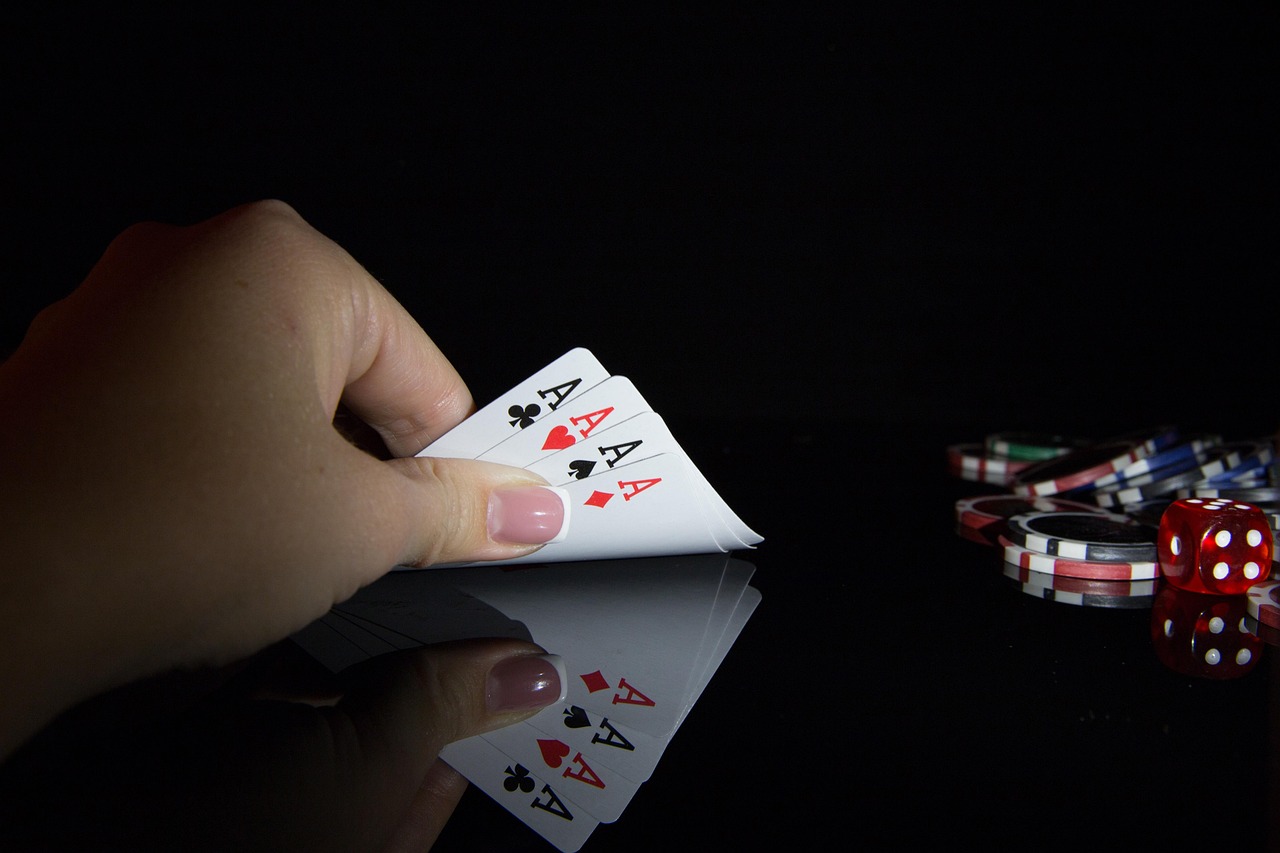
I. The Blackjack Natural — Ace Plus Ten
A blackjack "natural" (sometimes called "blackjack" or "two-card 21") is any combination of an Ace and a 10-value card (10, Jack, Queen, or King) on the player's or dealer's first two cards. Defining traits:
- Total: exactly 21
- Number of cards: exactly two
- Payout: 3:2 (standard) or 6:5 (degraded)
- Cannot be replicated by hitting (e.g., 5+6+10 = 21 with three cards is just a "21," not a natural)
The natural is the highest possible hand. It beats any non-natural 21. A natural vs natural is a push (tie, bet returned).
Probability — One in Every 21 Hands
Six-deck shoe (312 cards: 24 Aces, 96 ten-values, 192 other):
- P(first card Ace, second card 10-value) = (24/312) × (96/311) = 0.0237
- P(first card 10-value, second card Ace) = (96/312) × (24/311) = 0.0237
- P(natural) = 2 × 0.0237 = 0.0474 ≈ 1 in 21 hands
II. 3:2 vs 6:5 — The Mathematical Catastrophe
Compare payouts on a $10 bet:
| Payout | Win on Natural | House Edge (6 deck, S17, DAS) |
|---|---|---|
| 3:2 (standard) | $15 | 0.40% |
| 6:5 (degraded) | $12 | 1.79% |
| 1:1 (table game variant) | $10 | 2.32% |
The single change from 3:2 to 6:5 raises house edge by 1.39 percentage points — a 4.5× increase. Across 100 hands of $25 bets:
- 3:2: expected loss ≈ $10
- 6:5: expected loss ≈ $45
UNLV Center for Gaming Research (2024 report) measured 6:5 blackjack market share on the Las Vegas Strip:
| Year | 6:5 Share of Strip Blackjack Tables |
|---|---|
| 2003 | 5% |
| 2010 | 25% |
| 2018 | 52% |
| 2022 | 62% |
| 2024 | 67% |
Most low-limit ($10-$25) tables are now 6:5. 3:2 tables persist primarily at $50+ minimums or in high-limit rooms. The shift is invisible to most players, who notice the "lower minimum" but not the payout change.
III. The Baccarat Natural — Eight or Nine
A baccarat natural is any two-card hand totaling 8 or 9. Key rules:
- If either Player or Banker has a natural on the first two cards, no further cards are drawn (third-card rule skipped)
- Natural 9 beats natural 8
- Natural 8 vs natural 8 = tie
- Natural 9 vs natural 9 = tie
- Any natural beats any non-natural total — even a non-natural 9 (impossible by definition; non-natural 9 is created only if both hands drew, so this scenario can't co-exist with a natural)
Probability
Per 8-deck shoe, probability of natural on either Player or Banker hand (excluding ties):
- Natural 9 on Player: ~9.1%
- Natural 8 on Player: ~9.1%
- Natural 9 on Banker: ~9.1%
- Natural 8 on Banker: ~9.1%
- At least one natural on a hand: ~33% (with frequent overlap of both natural)
IV. Why Naturals Matter Asymmetrically
In blackjack, naturals are the player's only source of premium payout (3:2 vs 1:1 standard). Remove the premium (6:5) and you remove the player's principal compensation for the dealer's "act first" advantage. Without 3:2 naturals, the game tilts decisively to the casino.
In baccarat, naturals don't pay premium (Banker still 1:1, Player still 1:1), but they bypass the third-card rule that creates Banker's mathematical edge. Natural-resolved hands have ~50/50 Player/Banker outcome; only non-natural hands give Banker its third-card asymmetry. This means roughly 1/3 of baccarat hands are essentially coin flips — a fact that's mathematically equivalent regardless of which side you bet.
V. The Insurance Bet — Natural-Adjacent
When dealer shows an Ace, blackjack offers "insurance" — a side bet (typically half the original wager) that the dealer's hole card is a 10-value (i.e., dealer has a natural). Pays 2:1.
Break-even probability: insurance pays 2:1, so it's profitable when P(dealer natural) ≥ 1/3.
Actual probability (6 decks, Ace already showing, 311 cards remaining): 96 ten-values / 311 = 30.87%.
Deficit: 33.33% − 30.87% = 2.46%, scaled by stake yields ~7.4% house edge on insurance. Always decline insurance with basic strategy — unless you're counting cards and the True Count tells you the remaining shoe is dense in 10s (typically TC ≥ +3, equivalent to true count adjustment).
VI. "Even Money" — Insurance in Disguise
When player has a natural and dealer shows Ace, casino offers "even money" — take 1:1 immediately instead of risking the push that occurs if dealer also has natural.
Mathematically: 1:1 guaranteed = $10 profit on $10 bet. Standard play with natural vs dealer Ace:
- P(dealer natural) × $0 (push) + P(no dealer natural) × $15 = 0.3087 × $0 + 0.6913 × $15 = $10.37
Standard play wins $10.37 in expectation; even money wins $10.00. Decline even money — the 3.7% premium on standard play is your edge from the 3:2 payout.
(On 6:5 games this calculation reverses: 6:5 standard play with insurance has lower EV than even money. Yet another way 6:5 makes the game worse.)
VII. Naturals in Online and Live-Dealer Versions
Online blackjack:
- RNG blackjack — natural probability identical to physical (~4.83%); payout disclosed in game help (verify before playing)
- Live-dealer blackjack — Evolution / Pragmatic / Playtech offer mix of 3:2 and 6:5; verify before sitting
- Mobile-only "Speed Blackjack" / "Power Blackjack" — almost universally 6:5 with extended side bets
Mobile casino apps disproportionately push 6:5 games to maximize per-session revenue. Always check the table info screen.
VIII. The Player's Action — Spotting the Trap
Three signals that a blackjack table is 3:2 (good) or 6:5 (bad):
- Felt printing — 3:2 tables print "BLACKJACK PAYS 3 to 2"; 6:5 tables print "BLACKJACK PAYS 6 to 5"
- Table sign — casino-mandated signage shows minimum bet AND payout
- Quick verbal check — ask dealer or pit boss: "Is this a 3:2 game?" If they say "this is 6:5" or hesitate, leave the table
Tables paying 1:1 on naturals (yes, they exist — typically labeled "Super Fun 21" or similar variants) have 2-3% house edges and should be avoided entirely.
IX. Common Misconceptions
- ❌ "6:5 is fine because the minimum bet is lower." The lower minimum is a marketing carrot; the higher edge eats your bankroll 4x faster.
- ❌ "A three-card 21 (e.g., 7+5+9) is also a natural." No. Only two-card 21 counts as natural; three-card 21 pays 1:1.
- ❌ "Insurance is good when I have a natural." Even money is mathematically worse than standard play with 3:2; reject both.
- ❌ "All baccarat naturals are equal." Natural 9 beats natural 8; equal naturals tie.
X. FAQ · Sources · Responsibility
What's the actual probability of a blackjack natural?
Why is 6:5 blackjack so much worse than 3:2?
What does a 'natural' mean in baccarat?
Is there a 'natural' equivalent in other games?
Does the dealer also get a natural in blackjack? What happens?
Why does insurance lose on average?
Sources
- UNLV Center for Gaming Research, The Decline of 3:2 Blackjack on the Las Vegas Strip, 2003-2024
- Edward O. Thorp (1962), Beat the Dealer, Vintage Books
- Michael Shackleford, Blackjack House Edge by Rule Variant, wizardofodds.com
- Stewart N. Ethier (2010), The Doctrine of Chances, Chapter on Blackjack Mathematics
- Tommy Renzoni (1973), Renzoni on Baccarat, Chapter on Naturals and the Third-Card Rule