I. Origin — From Ivory to Clay Composite
Pre-1880, players bet directly with whatever coinage they had — gold, silver, sometimes shells or bone fragments. This caused slow settlement and constant disputes over coin value. The earliest standardized casino tokens emerged on Mississippi riverboats around 1880, using carved ivory in distinct colors.
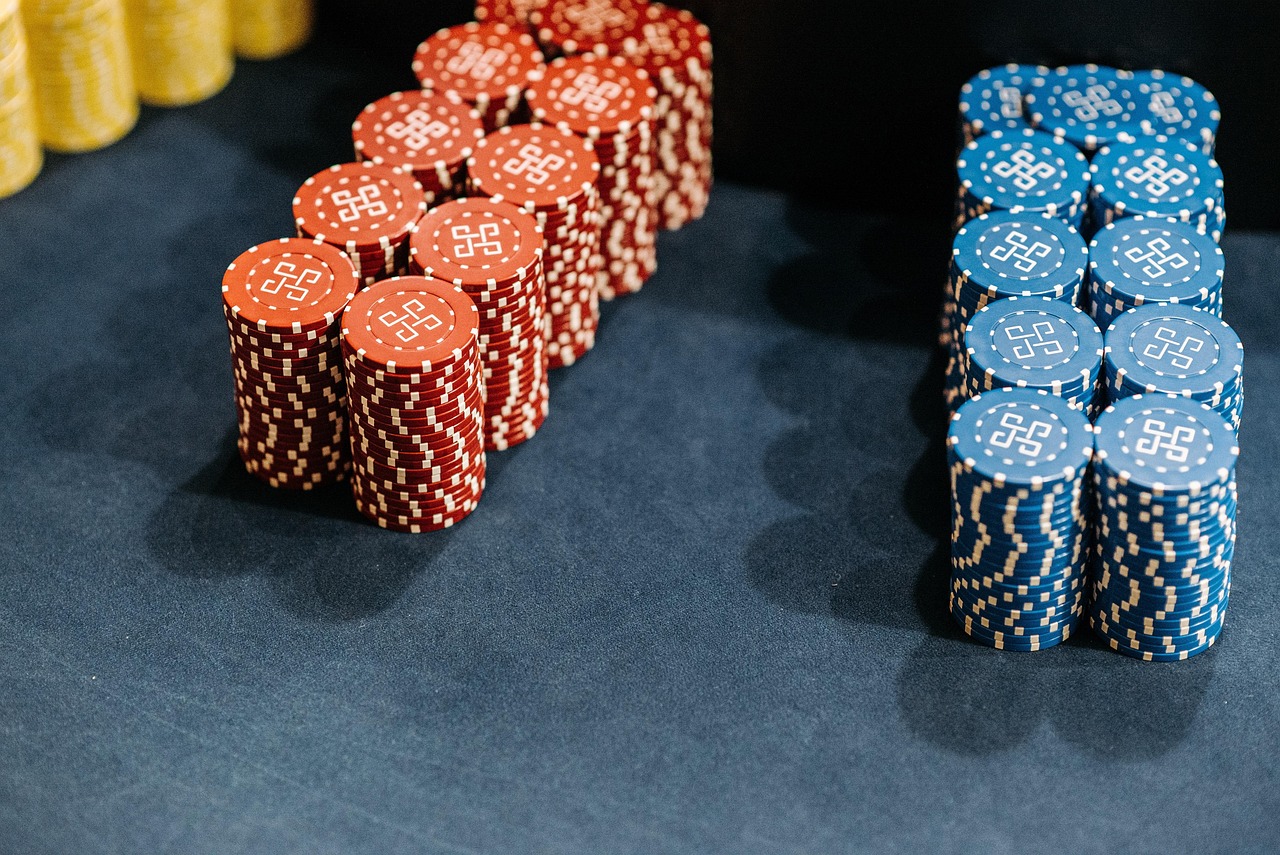
By 1900, ivory bans drove the industry to clay composite — the manufacturing technique developed by Burt Co. and Bud Jones in the United States. The recipe: kaolin clay, chalk, sand, and shellac, formed under high pressure into 39mm discs with a decorated inlay disc embedded in the center. This basic process is essentially unchanged today.
1950s Las Vegas — particularly the Sands and Flamingo — pioneered branded casino chips: distinctive colors and decorative artwork that identified the issuing property. By the 1970s, chips had become a marketing asset as much as a currency token.
II. The Disassociation Effect — Why Chips Exist
Behavioral economists Drazen Prelec and George Loewenstein documented the "pain of paying" in The Red and the Black: Mental Accounting of Savings and Debt (Marketing Science, 1998): paying with cash creates stronger psychological friction than paying with credit card, credit card stronger than digital wallet, digital wallet stronger than tokens.
Empirical demonstration (MIT Sloan, 2004): same blackjack players' average bet sizes:
- $100 cash directly on table: avg bet $12/hand, high caution
- Same $100 converted to $5 chips: avg bet $18/hand, moderate caution
- Upgraded to $25 chips: avg bet $22/hand, reduced caution
The denomination-color-brightness combination matters too: bright-colored, high-denomination chips correlate with even higher bets. This is why casinos visibly offer to "color up" your chips into higher denominations — it's not just a service, it's behavioral nudging.
III. International Color-Denomination Standards
| Denomination (USD) | AGA Standard | Nickname | Typical Setting |
|---|---|---|---|
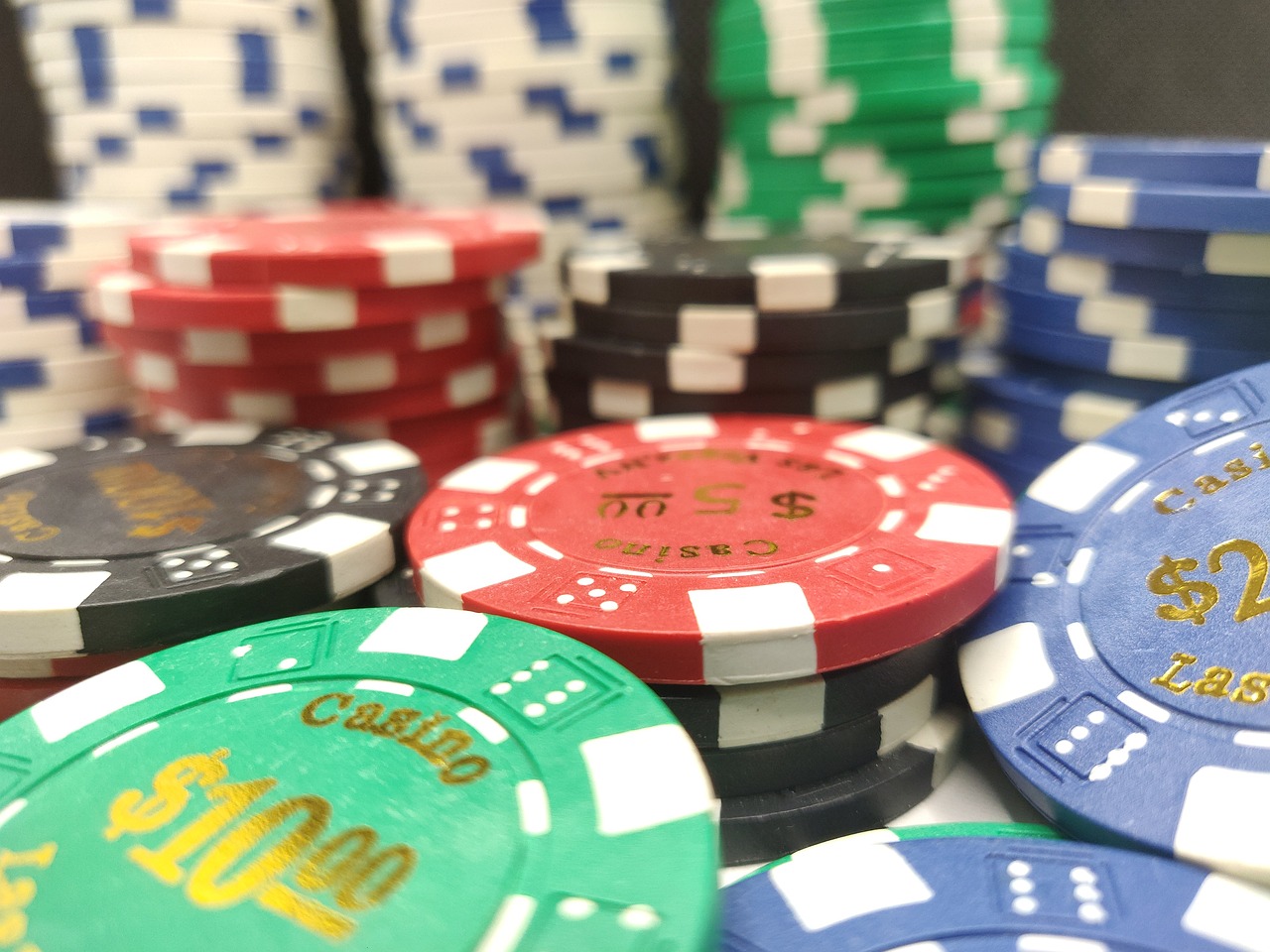
| $1 | White / Light Blue | "Buck" | Low-stakes, tips |
| $2.50 | Pink | "Snapper" | Blackjack 3:2 fractional pay |
| $5 | Red | "Nickel" | Mainstream low-stakes |
| $25 | Green | "Quarter" / "Lettuce" | Mainstream mid-stakes |
| $100 | Black | "Buck Black" | High-stakes |
| $500 | Purple | "Barney" (purple) | VIP |
| $1,000 | Orange / Yellow | "Pumpkin" | High-limit room |
| $5,000 | Gray / Brown | "Chocolate" | VIP high-limit |
| $10,000 | Brown / Dark Green | "Toad" | Baccarat VIP |
| $25,000+ | Plaque (rectangular) | "Plaque" | Whale rooms |
IV. Plaque — The VIP Rectangle

Plaques (rectangular tokens, 80-100mm long × 60mm wide) replace round chips at denominations of $5,000 and above. Design rationale:
- Stability: rectangular plaques don't roll across tables — critical when betting $50K+ at baccarat
- Visual differentiation: no chance of mistaking a $5K plaque for a $100 black chip
- Surface area: room for complex anti-counterfeit (holograms, signatures, casino seals)
- Ceremonial gravitas: betting plaques at VIP tables is a social ritual that whales value
Historic high: HK$1,000,000 single-piece plaque at Macau Sands Cotai (2014, recalled per anti-money-laundering reforms). Current largest in circulation: Wynn Macau USD $250,000 equivalent plaque.
V. The Macau Dead-Chip System
Macau's distinctive VIP-room economic instrument: Dead Chips (Non-Negotiable Chips / 泥码).
Mechanism:
- Junket operator deposits HK$10M with casino, receives HK$10M in dead chips
- Junket exchanges dead chips at 1:1 to VIP player against player cash (or credit)
- VIP must bet dead chips through; cannot redeem directly
- Winning bets pay Cash Chips (redeemable); losing bets consume dead chips
- Casino pays junket commission 1.25-1.40% on total dead chip rolling
- Junket distributes 60-70% of commission back to player as rebate
Why it works: it incentivizes high-volume play (more rolling = more commission), provides a quasi-credit facility (junket effectively underwrites player liquidity), and creates a measurable performance metric. Macau 2023 VIP rolling: HK$5.7 trillion (DICJ data). The 2014 anti-corruption crackdown and the 2021 Suncity bankruptcy curtailed the system, but it remains the dominant Macau VIP economic engine.
VI. Six-Layer Anti-Counterfeit Architecture
- Clay composite material — density 1.5-1.8 g/cm³, precision ±0.05g per chip. Plastic counterfeits feel obviously lighter and are detected by routine cage handling
- UV-reactive markings — hidden patterns visible only under ultraviolet light; cage scanners verify in seconds
- Microprinting — 0.1mm edge text, requires 10x magnification, virtually impossible to replicate
- Proprietary edge mold — each casino has unique indentation pattern; mold cost $50K-$100K, manufactured by Cosmo Carving / GPI under contract; molds not sold to third parties
- Multi-color inlay — center decal uses 4-7 ink colors with proprietary pigments; offset printing impossible without specialized equipment
- RFID UHF chip — embedded chip with unique serial number; real-time tracking across the casino floor (Wynn, Marina Bay Sands, Cotai Strip have full RFID deployment; downtown Las Vegas partial)
VII. The Chip Lifecycle
- Design — casino + manufacturer (Bud Jones / GPI / Matsui Gaming) co-design over 6-12 months
- Production — clay press + inlay + RFID insertion, $0.50-$3.00 cost per chip depending on denomination
- Issuance — regulator registration; chip total becomes casino liability (player-held chips = casino debt to players)
- Circulation — player ↔ table ↔ cage cycle
- Retirement — every 5-10 years, chip series updated; 90% destroyed, 10% sold to collectors via authorized dealers
- Abandonment — closed casino chips revert to casino after 5 years per Nevada NRS 463.366 (or jurisdictional equivalent)
2007 Stardust Casino closure: ~$500,000 in un-redeemed chips after 5-year recovery window. All destroyed per Nevada statute. Same chips traded on eBay at 10-20x face value among collectors.
VIII. The 2010 Bellagio Heist — Why RFID Matters
December 14, 2010, 3:48 AM PST: Anthony Carleo, son of a Las Vegas judge, drove a motorcycle to the Bellagio's craps table area, brandished a Glock, and grabbed $1.5 million in plaques (mostly $25,000 chocolate plaques) before fleeing. The robbery took 73 seconds.
What the robber didn't know: every $5,000+ chip at Bellagio carried RFID. Within 12 hours, all stolen plaques were flagged as un-redeemable across the MGM Resorts property network. The Resorts World Las Vegas eventually arrested Carleo when he tried to fence chips at 1:0.1 face value through Bellagio insiders. Sentenced to 9 years federal prison.
Lesson: RFID chips have transformed casino chip theft. Even casino-floor pickpocketing now relies on quick redemption at the same property — and surveillance cameras typically lock onto unusual chip handling within minutes.
IX. Common Misconceptions
- ❌ "I can bet a Bellagio chip at Caesars." Chips are property-specific. Inter-casino chip transfer is generally not allowed.
- ❌ "Chip ≠ money." Mathematically and legally chip = money. The casino owes you the face value on redemption.
- ❌ "$10K chip win → no IRS form." Single redemption ≥ $10,000 requires Form 8300 (cash transaction report).
- ❌ "Tipping with chips is the dealer's bonus." Tip ('toke') is split with other dealers via pooling system at most casinos; individual dealer takes home fraction.
X. FAQ · Sources · Responsibility
Why do casinos use chips instead of cash?
Are casino chip colors standardized worldwide?
What's a 'dead chip' in Macau?
What's the difference between Plaque and Chip?
What anti-counterfeit technologies do modern chips use?
Can casino chips be collected?
Sources
- Drazen Prelec & George Loewenstein (1998), The Red and the Black: Mental Accounting of Savings and Debt, Marketing Science
- American Gaming Association, Standard Chip Denomination Color Guide 2023
- Macau DICJ, VIP Rolling Statistics & Junket Operations Q4 2023
- Nevada Revised Statutes §463.366, Abandoned Chips Disposition
- GPI (Gaming Partners International), Anti-Counterfeit Whitepaper, 2022