I. The Anatomy of a Craps Table — Where the Boxman Sits
To understand the Boxman, picture the table. A standard craps table is roughly 12 to 14 feet long, oval, with rounded ends. Around it cluster up to 16 players and four casino employees:
- Stickman — stands at the long side, opposite the Boxman, controls the stick that pushes the dice to the next shooter, calls out the rolls, and books center-table proposition bets (Hardways, Any 7, Horn).
- Two Base Dealers — one at each end of the table, opposite each other, handling Pass Line, Don't Pass, Come, Place, and Field bets for their half of the table.
- Boxman — seated dead-center, opposite the stickman, behind the chip rack. The only seated employee. The only one with line-of-sight to every payout and every bet.
His seat is no accident. From that vantage point he can see both ends of the layout simultaneously, watch the dice hit the back wall, monitor the stickman's prop-bet payouts behind him via mirror or peripheral vision, and physically guard the chip bank. Removing the Boxman from a craps table is like removing the umpire from a baseball game — the game can technically proceed, but accuracy collapses within minutes.
II. Why Craps Demands a Permanent Referee
Bet density is the answer. A single craps roll can simultaneously resolve:
- Pass Line / Don't Pass (come-out roll)
- Come / Don't Come (every roll after a point is established)
- Free Odds (multiplier on Pass/Come)
- Place 4, 5, 6, 8, 9, 10
- Buy / Lay bets
- Hardways (Hard 4, 6, 8, 10)
- Field bet
- Big 6 / Big 8
- Any 7, Any Craps, 2, 3, 11, 12, Horn, Yo-Eleven
A full table with 12 active players can have 80-150 chips on the layout at any instant. A single roll of 7 on the come-out wipes Don't Pass bets, pays Pass Line, busts every Place number except 7, settles Any 7, Field (a loss), Horn, and Yo-Eleven simultaneously. Payouts must be calculated, paid, and verified before the next shooter touches the dice — typically within 15-20 seconds. No single dealer can track that. No roaming pit boss can adjudicate that. The Boxman exists because the math of craps requires a referee with the bench seat.
III. The Six-Step Roll Sequence
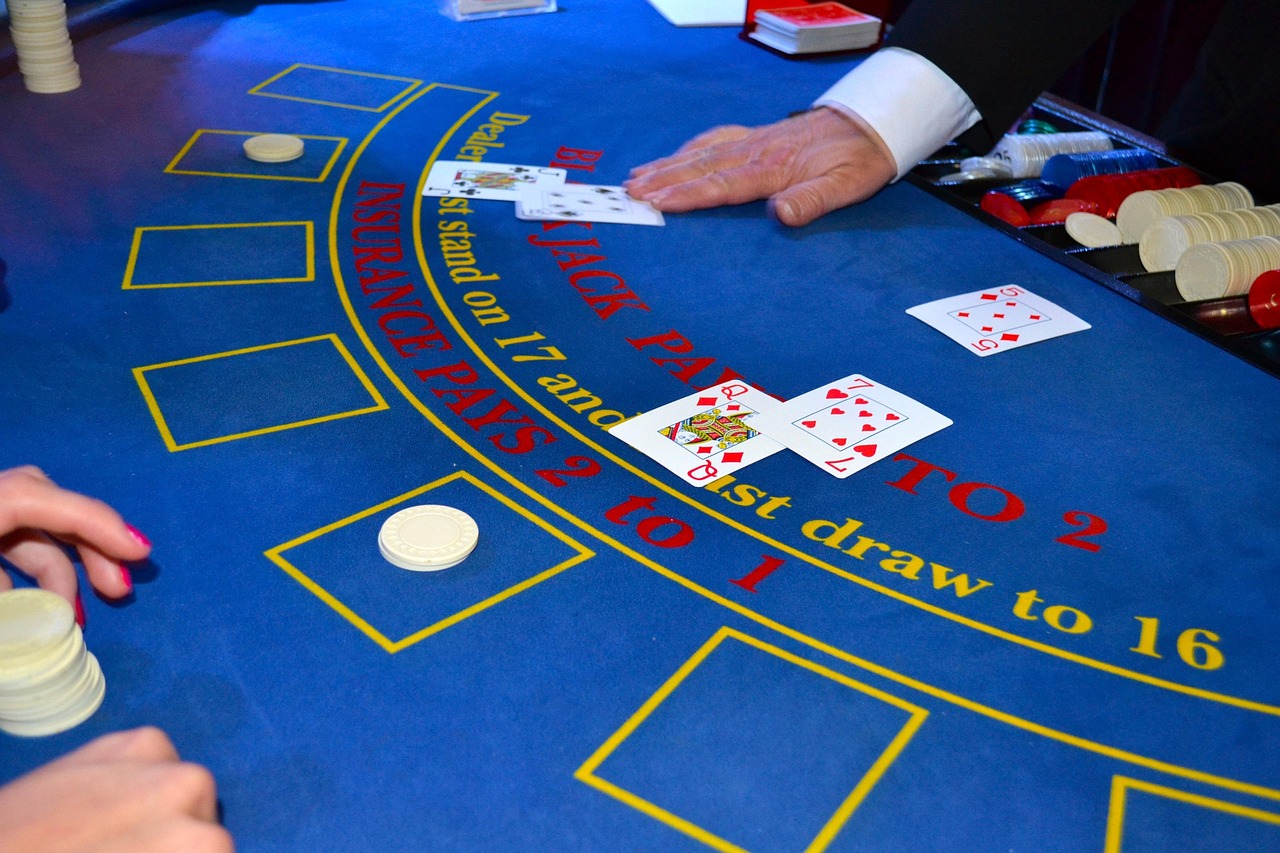
For every roll, the Boxman runs the same internal protocol:
- Pre-roll scan — every chip upright, no protruding stacks, shooter has both dice, no hands over the table.
- Dice in flight — both dice must hit the opposite back wall. A "no-roll" (one die off-table, one die not hitting the wall) is called by the Boxman, not the stickman. He overrules ambiguous calls.
- Verify result — the stickman announces ("Seven out, line away"), the Boxman silently confirms by checking the dice himself before the stickman scoops them.
- Watch the payouts — both base dealers begin paying winners. Any payout over $100, or any complex payout (Hard 8 = 9:1, Buy bet with commission), the Boxman watches the math. A dealer who overpays $50 is corrected mid-motion.
- Color-up and exchanges — when a player wants to convert $25 chips to $100 chips, the dealer announces "Coloring up — five hundred dollars," and the Boxman verifies the count before approving.
- Reset — stickman returns dice, base dealers reset Come odds and Place bets, players make new wagers. The Boxman scans for past-posting (late bets), then nods. Next roll.
Six steps. Twenty seconds. Eighty to a hundred and twenty times per hour. For an eight-hour shift, that is roughly 800-1,000 cycles — each one a small judgment call.
IV. The Chip Rack — Half a Million Dollars at His Elbow
Directly in front of the Boxman sits the chip rack, also called the bank. A standard Strip craps table holds:
| Denomination | Typical Quantity | Value |
|---|---|---|
| $1 (white) | 500 | $500 |
| $5 (red) | 1,000 | $5,000 |
| $25 (green) | 1,000 | $25,000 |
| $100 (black) | 1,500 | $150,000 |
| $500 (purple) | 500 | $250,000 |
| $1,000 (orange/yellow) | 100 | $100,000 |
| $5,000 (gray plaque) | 10 | $50,000 |
| Total | ~$580,000 |
High-limit tables push the total above $2 million. Macau VIP craps (rare — baccarat dominates) and Bellagio Salon Privé carry $5M+ banks with $25,000 plaques and HK$1M Macau plaques.
Bank fills (cage delivers chips to the table) and credits (cage takes chips back) require two-signature approval: Boxman + Pit Boss. Each transaction is logged on paper Fill/Credit Slips and immediately entered into the casino management system. At shift end, the Boxman participates in a Bank Count — every chip in every compartment is counted on camera, totaled, and reconciled against opening balance plus drops minus credits. A variance of one $25 chip triggers paperwork; a variance of one $500 chip triggers investigation.
V. Dispute Resolution — The Boxman's Word Is Law
Every shift, a Boxman handles disputes:
- "My Pass Line bet should have paid 1:1, that was $50, not $25." Boxman replays the layout from memory or asks for surveillance pull. If undecided, ruling favors casino in real time; surveillance review can issue refund later.
- "The dice didn't hit the back wall." Boxman calls "good roll" or "no roll" — no appeal.
- "My Hardway 8 was working on the come-out." Default is Hardways are OFF on come-out unless player explicitly says "working." Boxman remembers (often from the stickman who would have noted it).
- "That was a past-post bet." Boxman watched the chip placement. If late, he picks the chips up and returns them: "Bet was after the dice, sorry." Surveillance backs him up if challenged.
- Drunk player accusation, dealer-collusion claim, late color-up request — Boxman defuses calmly, escalates to Pit Boss only when emotion or stakes demand.
House rule everywhere: the Boxman's ruling is final at the table. Players who want to appeal can ask for the Pit Boss, but the Pit Boss is trained to support the Boxman in front of the customer. Disagreements happen privately.
VI. Surveillance Coordination — The Eye in the Sky
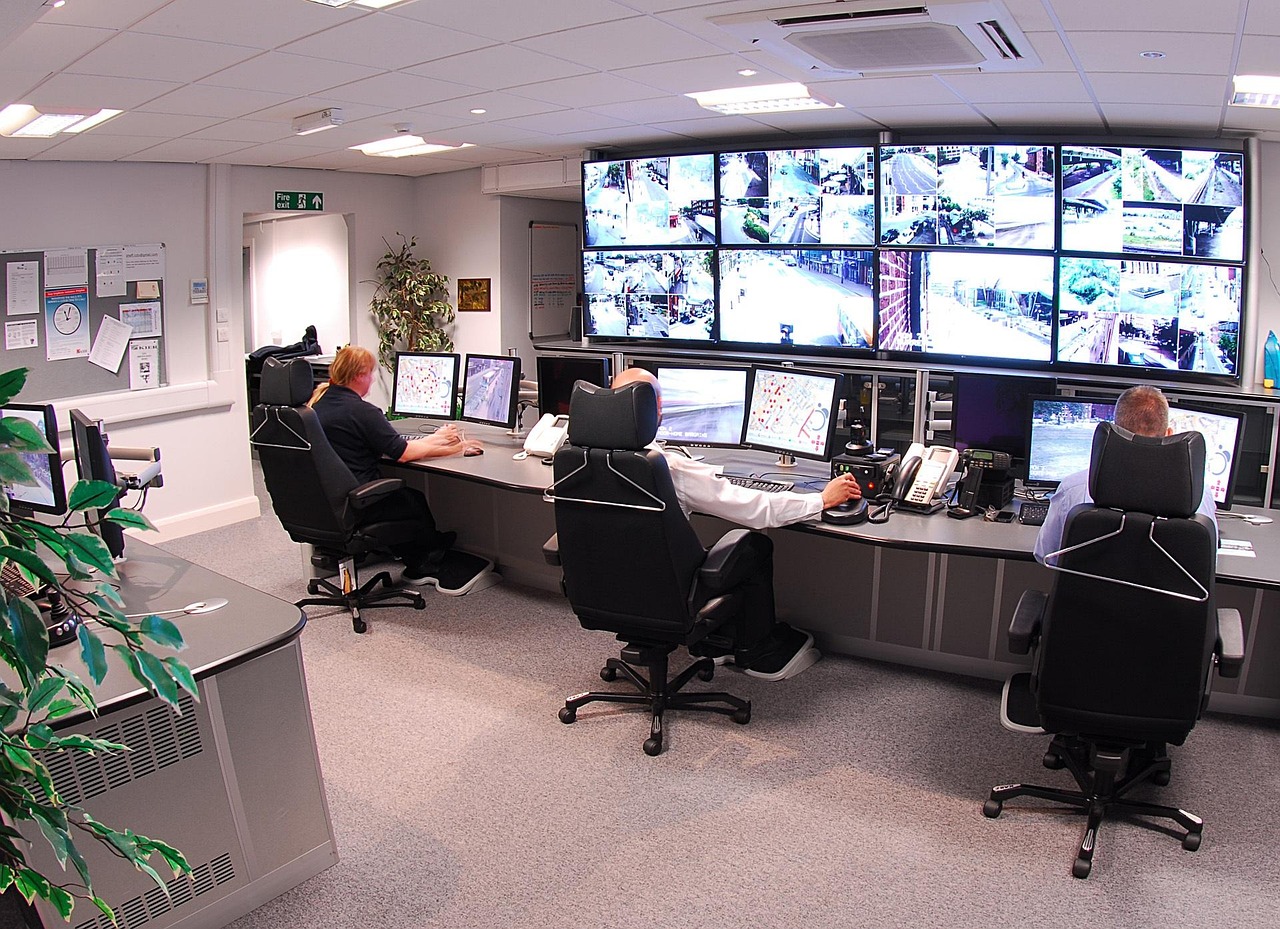
Above the casino floor, a windowless room of monitors watches every table. A typical Strip property runs 1,500-4,000 cameras and a 24/7 staff of 12-30 surveillance operators per shift. The Boxman is the floor's interface to this room.
How the protocol works:
- Surveillance to Boxman — discreet ear-piece or phone at the pit stand. "Box 4, watch the seat-six shooter, dice are landing soft on the back wall — possible dice control attempt."
- Boxman to Surveillance — pit phone or hand signal to a wall-mounted intercom. "Camera 14, watch the dark-haired man in the green jacket — he just bet $500 on Hard 8 immediately after dice left the stickman's hand. Check his timing."
- Tape pull — if a $5,000 dispute can't be resolved in real time, Boxman requests a tape pull. Surveillance reviews the last 30 seconds and reports back in 2-5 minutes.
Without this loop, sophisticated advantage play — slug tracking, past-posting, marked chip insertion, dealer collusion — would be invisible. The Boxman is not just a referee. He is the casino's nervous system.
VII. Comp Rating — Where the Player Becomes a Profile
As the dice fly, the Boxman is also rating. Every 5-10 minutes, he eyeballs each player's average bet, estimates hours played, and enters the data into the loyalty system terminal at the pit stand:
- Seat 3: Avg bet $200 Pass Line + $400 Odds + $50 Place 6 — Theo basis ~$100/hr at 1.41% Pass / 0.0% Odds → updates pit-side rating.
- Seat 7: Avg bet $25, plays only Pass Line, mostly observes → casual rating, free drinks but no room comp.
This data feeds the property's comp engine. The Boxman's ratings determine whether a player walks away with a $400 buffet voucher or a $10,000 suite for the weekend. Over-rating costs the casino real comp dollars; under-rating loses the player to a competitor. Senior Boxmen are valued for their rating accuracy.
VIII. Macau and the VIP Comparison
Macau's casino architecture is different. Mass-market craps barely exists — baccarat is 88% of revenue. Where craps does run, it usually exists in the main mass floor with a Western-trained Boxman, often Filipino or Australian.
The Macau VIP rooms — operating under the junket model — have their own supervisor analog called a Floor Inspector (公关 / loosely "Public Relations Supervisor" or VIP Host). The structure differs: ① no roaming pit boss because each VIP room has a single high-stakes baccarat table; ② the inspector is the player-relationship manager, not just a referee — closer in function to a Western Casino Host than to a Boxman; ③ his authority covers credit issuance, dead-chip allocation, and junket-rep coordination. The Boxman's referee role is replaced by a single dealer plus an inspector for baccarat. Craps' demand for a permanent on-table supervisor is, in this sense, an artifact of American game design.
IX. The Career Path
| Stage | Years | Compensation | Function |
|---|---|---|---|
| Craps Dealer (Base / Stick) | 0-3 | $28-45/hr + tokes | Payouts, layout, table mechanics |
| Senior Dealer | 3-6 | $35-50/hr + tokes | High-limit dealing, occasional Stickman |
| Boxman | 5-12 | $45-65/hr + partial tokes | Table supervision, rating, surveillance liaison |
| Pit Boss (Craps Pit) | 10-18 | $70K-$110K salary | 3-5 tables, larger comp authority |
| Floor / Shift Manager | 15-25 | $120K-$200K + bonus | Full pit floor, hiring/discipline |
| Casino Manager / VP Operations | 20+ | $250K-$500K+ | Whole gaming operation |
A senior Bellagio Boxman with strong toke pool can earn $130,000-$160,000 fully loaded. Many veterans stay in the seat by choice — the toke economics often exceed Pit Boss salary, and the work remains physical and interesting compared to the politics-heavy management track.
X. Why the Boxman Endures in the Age of Smart Tables
Casinos have tested electronic craps tables (Interblock Organic Craps, Aruze Roll to Win) where dice and bet resolution are handled by sensors and screens, eliminating the need for a Boxman. They survive in some markets — particularly low-volume regional casinos and cruise ships — but premium Las Vegas, Atlantic City, and Macau continue to staff every premium craps table with a full crew of four. Three reasons:
- Atmosphere — craps is theatre. The shouting, the stickman's cadence, the Boxman's calm authority — strip those away and you have a video game.
- Comp accuracy — automated rating systems consistently under-rate craps because betting patterns are too complex for current AI to interpret without human judgment.
- Cheat catch rate — sophisticated past-posting and dice-influencing attempts are caught faster by an experienced Boxman than by sensor arrays.
The Boxman is the casino's bet that craps' appeal is human, not algorithmic. As long as that bet pays, the seat stays.
Sources & Further Reading
- Scoblete, Frank. Casino Craps: Shoot to Win! (Triumph Books, 2010) — definitive practitioner reference on table crew roles and dispute protocols.
- Nevada Gaming Control Board — Regulation 5: Operation of Gaming Establishments (chip count, fill/credit slip procedures, supervisor authority).
- UNLV Center for Gaming Research — "Craps Dealer Career Path and Compensation Survey 2022."
- Hannum, Robert C. & Cabot, Anthony N. Practical Casino Math (Institute for the Study of Gambling and Commercial Gaming, 2005) — house edge tables and rating system mathematics.
- Macau Gaming Inspection and Coordination Bureau (DICJ) — VIP Room Floor Inspector job classification, 2023 sector report.