I. Lower East Side, 1953–1968 — The Gin Kid
Stuart Errol Ungar was born on September 8, 1953, on Manhattan's Lower East Side. His father, Isidore "Ido" Ungar, was a bookmaker who ran a bar called Foxes Corner at the intersection of 7th Street and Second Avenue, with an upstairs back-room gambling operation. Stu grew up among hustlers, made men, and serious card players; the family business was illegal gambling and the back room was the family classroom.
By age ten he was beating adults at gin rummy. By age twelve, according to multiple childhood accounts in the Dalla and Alson biography, he could memorize the order of a six-deck blackjack shoe at the bar after a single pass. At fourteen, after Ido's death from a heart attack in 1967, Stuey was placed under the informal protection of Victor Romano, a Genovese family enforcer who recognized the kid's gifts and steered the action away from him until he was old enough to play for his own money. By sixteen Stu Ungar was the best gin rummy player in New York City and arguably already the best in the world.
II. The Migration to Vegas, 1976
By the mid-1970s the New York gin action had collapsed for Ungar — opponents at his level had stopped offering games. In 1976, urged by Romano and by a string of high-stakes acquaintances, Ungar moved to Las Vegas. He was 22, five foot four, weighed roughly 110 pounds, and was almost universally underestimated on first sight. That impression rarely survived a hand.
His arrival is part of poker mythology: shortly after landing in Vegas, Ungar reportedly beat Doyle Brunson — already a two-time WSOP champion — for around $50,000 in a private gin rummy session, at which point Brunson refused all subsequent gin games. The incident became part of the standard Doyle did the right thing bar-story canon, and it set the tone for Ungar's gin career for the next decade: he would play whoever would play him, until they wouldn't.
III. The 1980 WSOP Main Event
In May 1980 the World Series of Poker Main Event at Binion's Horseshoe drew 73 entrants. Ungar, in his first Main Event appearance, came in as an unknown — a gin specialist with limited recorded poker results. He won. The final hand, against Doyle Brunson, ended with Ungar's A-Q outdrawing Brunson's A-7 on a board that paired the queen on the river. The $385,000 prize was the largest cash payday of Ungar's life to that point.
What the WSOP win did was put Ungar on the radar of every casino in Las Vegas. He was now identifiable on sight, photographed, profiled in Sports Illustrated and The New York Times, and pursued by every pit boss in town who wanted to comp the famous new champion to high-stakes blackjack. Ungar obliged.
IV. The Stardust Hand
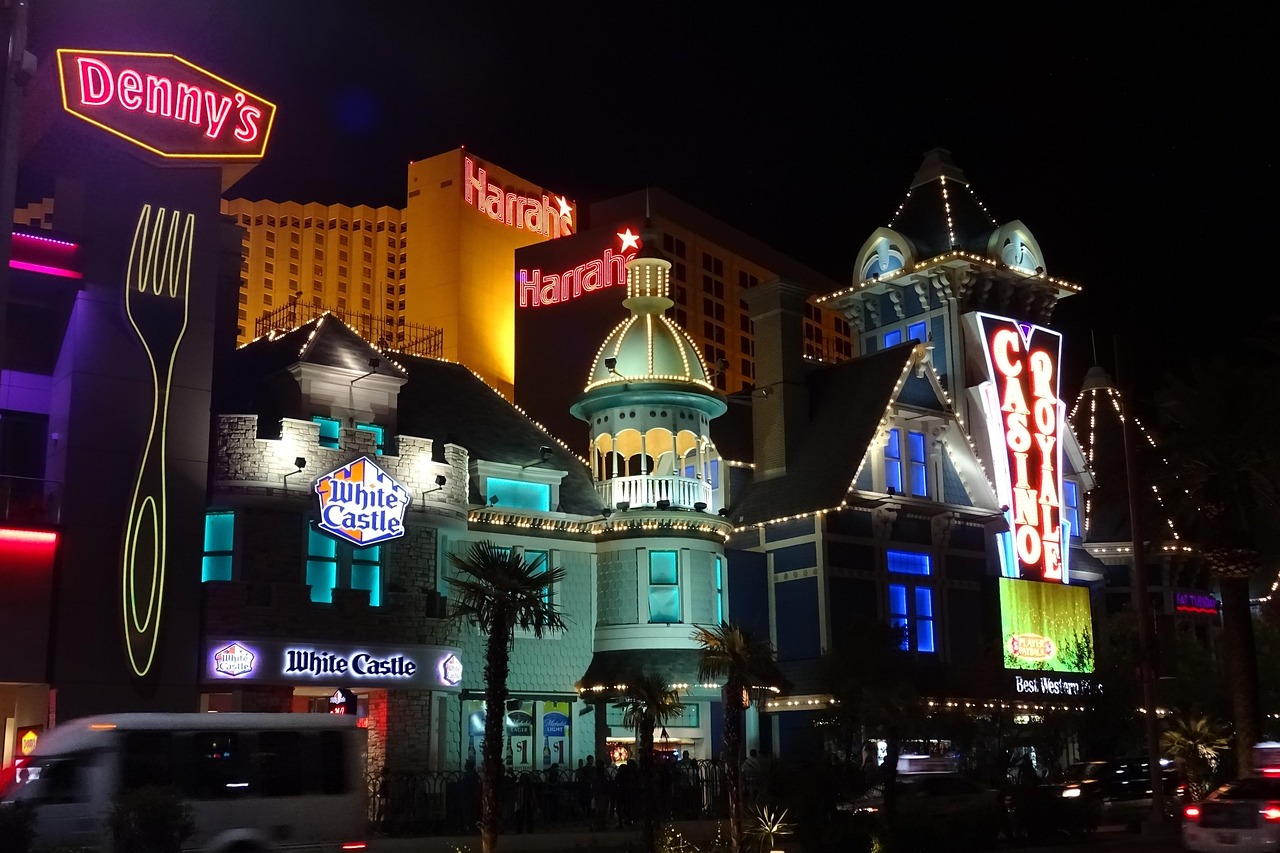
The Stardust Hotel and Casino sat on the north side of Las Vegas Boulevard, opposite the Frontier, from 1958 until its closure and demolition in 2007. In late 1980 its high-limit blackjack pit was one of the deepest on the Strip — a six-deck shoe with roughly 75% penetration, $5,000 table maximum, willing to comp recognized players to suites and meals.
The exact date is disputed; the Dalla-Alson biography places it in November 1980, while a Card Player magazine reconstruction puts it in October. The setup is consistent across sources: Ungar at the high-limit table, six or seven hours into a session, having bet up from $500 to $5,000 a hand as the shoe ran deep. With perhaps 14 cards left to deal before the shuffle, Ungar leaned forward and told the dealer something close to: "That last card is a deuce of spades."
The dealer paused. Glanced at the pit boss. The pit boss said deal it out. The dealer dealt — burn, hit, dealer card, until the second-to-last card was placed. The next and final card flipped was the deuce of spades.
What happened in the following minutes is also reasonably documented. The pit boss called the shift manager. The shift manager called the casino manager. Ungar was politely but firmly informed that he was finished at the Stardust. His chips were colored up — somewhere between $45,000 and $80,000 in winnings for the session, the figure varies by source — and he was walked off the floor. By the next morning his photograph was on the desk of every Strip blackjack manager. Within 72 hours the broader industry-wide bar was effective; within two weeks, no major Strip property would deal him a hand of blackjack.
V. The Math of What Ungar Did
Calling a single specific card — not the count, not the next class of card, but the actual rank and suit — sounds like fiction. With 14 cards remaining in a 312-card shoe, and assuming Ungar had perfectly tracked composition, what would his actual probability of being right be?
Consider a worked toy case. Suppose Ungar knew with certainty that, of the final 14 cards, exactly one was a deuce of spades (each shoe contains exactly six deuces of spades — one per deck — and depending on what had been seen, anywhere from zero to six could remain). For a randomly ordered remaining 14 cards, the probability that the last card is the deuce of spades is 1/14 ≈ 7.1%.
But Ungar wasn't operating on a uniform prior. He was tracking the running burn order and the dealer's mechanical pattern. If he had also noted positional cues — burn-card timing, dealer hand path, the angle of the shoe against the table — the prediction becomes a conditional probability with a much smaller effective sample space. Some serious analysts who have looked at the incident (including Anthony Curtis at the Las Vegas Advisor in a 1999 column) argue the most likely explanation is that Ungar had narrowed it to roughly four candidate cards and called the most distinctive one for theatrical effect; even on that thinner reading, his probability was closer to 25% than 7%, and over years of barroom card tricks he had refined the showmanship. Whether his Stardust call was an exact prediction or a brilliantly framed conditional bet, the operational reality from the casino's standpoint was the same: this player could not be allowed back in.
VI. Gin Rummy — The Edge That Cleared the Field
Ungar's blackjack career ended in 1980. His gin career was already winding down — not because he was losing, but because, from roughly 1978 onward, no world-class player would face him for serious stakes. The few who tried were dismantled: Harry "Yonkie" Stein, Frank "Tabasco" Russo, Bobby Singer, and a parade of New York and Vegas regulars all gave up after a few sessions.
Reconstructions of Ungar's gin win rate against top-tier opposition (based on session logs that survive in the Dalla biography and a 1999 Card Player retrospective) suggest a sustained edge of roughly 40% over the second-best player in the world. To put that in perspective: in most high-skill games, a great player's edge over a strong professional is 2–8%. Ungar's edge in gin was an order of magnitude beyond that. He simply did not lose long sessions to opponents below his level, and his level was unmatched.
His cumulative gin winnings are usually estimated at $30 million or more, all of it lost — to sports betting (his lifetime sports-book record was catastrophic; he never developed a serious handicapping edge), to track betting (worse), and to cocaine. By the late 1980s, the gin action was effectively dead and Ungar was supporting his lifestyle entirely from poker cash games and the occasional tournament.
VII. Tournament Record — WSOP and the Trail of Bracelets
Ungar's WSOP record remains historically extraordinary. He is the only player to win the Main Event three times, and the only player to win it both before and after the field expanded past 200 entrants.
| Year | Event | Result | Prize |
|---|---|---|---|
| 1980 | WSOP Main Event ($10,000 NLHE) | 1st of 73 | $385,000 |
| 1981 | WSOP Main Event ($10,000 NLHE) | 1st of 75 | $375,000 |
| 1981 | WSOP $1,000 Mixed Doubles | 1st (with Doyle Brunson) | $30,000 |
| 1983 | WSOP $5,000 Seven Card Stud | 1st | $110,000 |
| 1990 | Pot-Limit Omaha (Hall of Fame Classic) | 1st | $74,000 |
| 1997 | WSOP Main Event ($10,000 NLHE) | 1st of 312 | $1,000,000 |
Ungar also won a total of five WSOP bracelets across his career and posted dozens of high-finishes in side events. His 1997 final-table performance — heads-up against John Strzemp on May 16, 1997, finishing with a turn-card straight to win the championship — is among the most-replayed tournament hands in poker broadcast history.
VIII. The Drug Years and the 1990 Collapse
Cocaine first appeared in Ungar's life around 1979. By 1981, a single overdose at the Dunes Hotel forced him to forfeit a major tournament. By the late 1980s he was using daily and increasingly destructive amounts; the chronic insufflation collapsed the cartilage in his nose, leaving him with the famous visible scarring from the mid-1990s onward. He married Madeline Wheeler in 1982, fathered a daughter Stefanie in 1982, and divorced in 1986; both his marriage and his relationships with his children, Stefanie and stepson Richie, were marked by long absences and occasional reconciliations.
In 1990 Ungar entered the WSOP Main Event with a chip lead going into Day 3, then was found unconscious in his hotel room and forfeited. His chip stack continued to be blinded down at the table for the rest of the day before being formally collected by the floor; he finished a phantom 9th. It was the public turning point. By 1993 he was largely banned from Las Vegas comp programs for non-payment of markers; by 1995 he was effectively homeless.
IX. The 1997 Comeback and the Final Year
The 1997 Main Event entry was staked by Mike Sexton, with smaller contributions from Bob Stupak and several others. Ungar showed up to Day 1 visibly damaged — wearing dark sunglasses to hide eye damage, his nose visibly reconstructed with what onlookers described as adhesive bandages. He won.
The third Main Event made him the only three-time winner, earned him the lasting nickname "The Comeback Kid," and put $1,000,000 in his hands. Within six months almost all of it was gone — to outstanding markers, to drugs, to bad sports bets, to family obligations he had long neglected. By spring 1998 he was again broke. He attempted a defense of his title at the 1998 Main Event but was unable to play; he failed to make it to the table for Day 1.
On November 22, 1998, Ungar was found dead in Room 6 of the Oakwood Motel on Boulder Highway, a budget motel where he had been staying for several weeks. Cause of death: coronary atherosclerosis with chronic substance abuse contributing. He was 45 years old. A wake at the Riviera was attended by Doyle Brunson, Mike Sexton, Bob Stupak, Erik Seidel, Phil Hellmuth, and over four hundred other members of the Las Vegas gambling community. Stupak paid for the funeral. The grave at Palm Memorial Park, Eastern Avenue, is marked with a simple stone reading Stuart Errol "Stuey" Ungar · 1953–1998 · The Kid.
X. FAQ · Sources · Responsibility
Did the Stardust incident really happen the way the legend says?
How could Ungar actually track a six-deck shoe?
Why was Ungar banned so fast — wasn't card counting legal?
How did Ungar make money after the blackjack ban?
Was Ungar's 1997 WSOP comeback a real return to form?
What killed Ungar at age 45?
Sources
- Nolan Dalla & Peter Alson (2005), One of a Kind: The Rise and Fall of Stuey 'The Kid' Ungar, Atria Books
- WSOP Main Event records 1980, 1981, 1997 — World Series of Poker official archive
- UNLV Center for Gaming Research, oral-history archive — Stardust-era pit personnel interviews
- Michael Konik (1990), The Last Days of Stuey Ungar, profile in Cigar Aficionado magazine
- Clark County (NV) Coroner's Office, death certificate of Stuart Errol Ungar, file 98-11-22-006